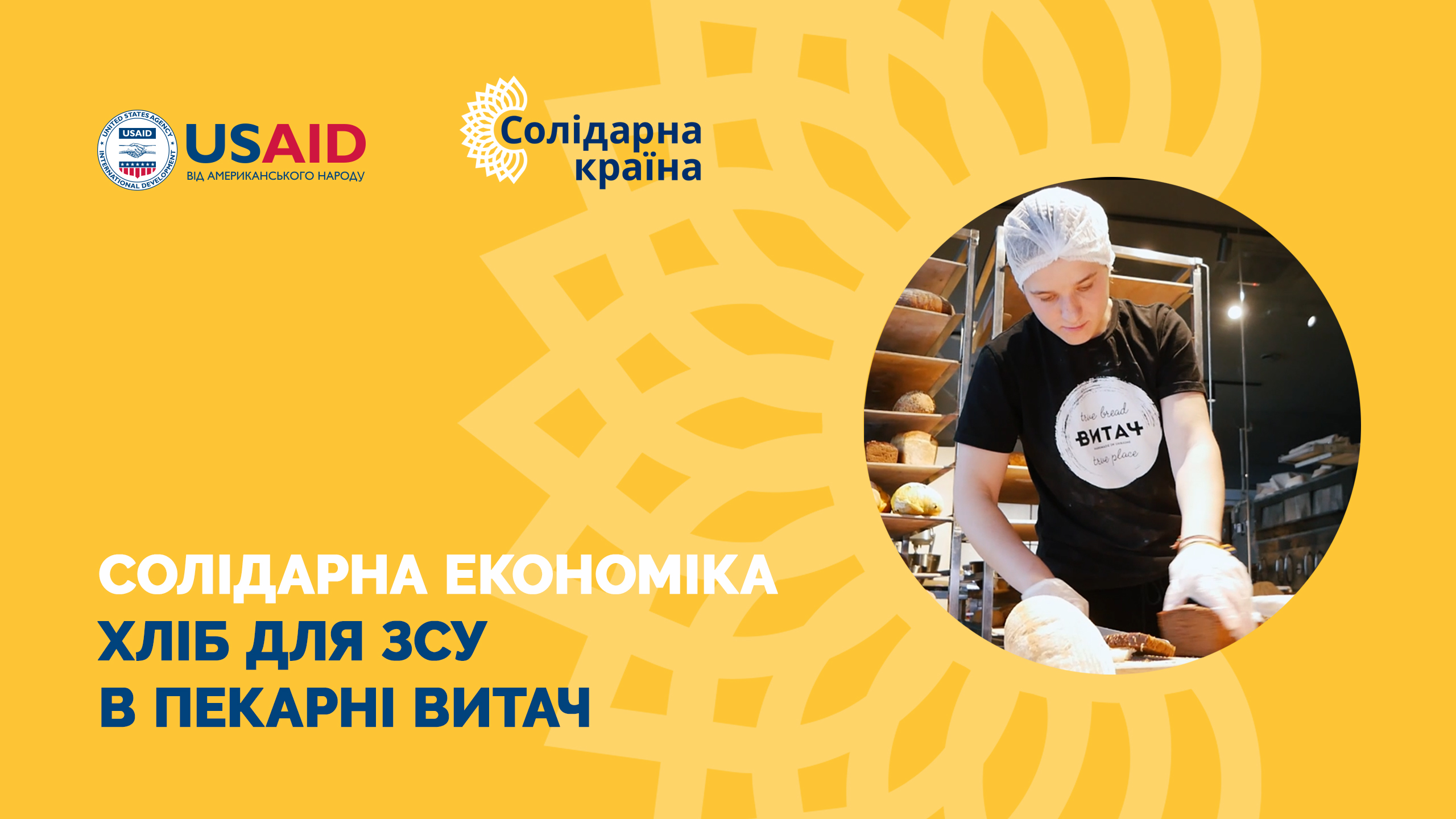
Bread for the Armed Forces of Ukraine at the Vytach bakery

11 May 2023

In Vytach bakery in Kyiv Oblast, craft bread in a wood stove is baked using ancient recipes. The Sobko family opened the bakery on the eve of the war. Now they bake sourdough bread for the Armed Forces. People who come here buy bread and donate to various initiatives. Thanks to this, business owners organize art and solidarity events. 


Vytach bakery is a member of the Network to Protect the Cultural Heritage of Ukraine through a Solidarity Economy, which was created with assistance from the USAID Economic Resilience Activity (ERA). The network promotes cooperation between local businesses and helps to implement joint volunteer projects. 


Dnipro police officers trained on dealing with domestic violence cases

11 May 2023

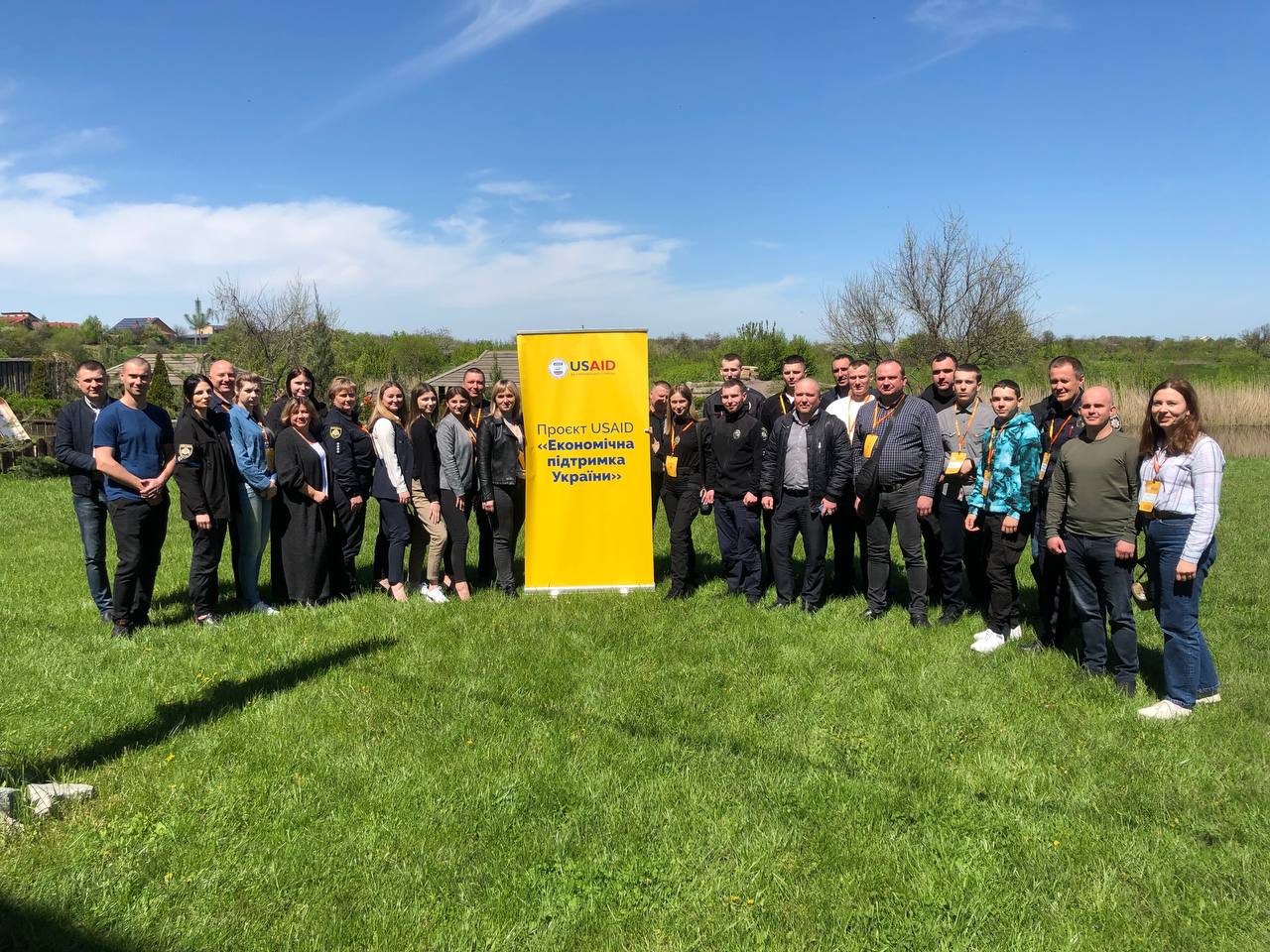
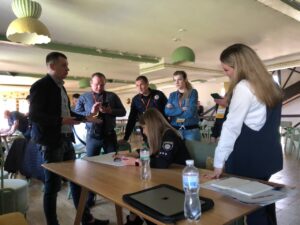
In April and May, the USAID Economic Resilience Activity (ERA) supported training for police prevention units in Dnipropetrovsk Oblast. A total of 180 district, patrol, and juvenile police officers from Kamianske, Kryvyi Rih, and Pavlohrad improved their knowledge and skills in responding to cases of gender-based and domestic violence. ERA’s trainers and consultants Hanna Karpechenkova and Hanna Tartynskikh explained the impact of the war in increasing the number of domestic violence cases.

“Economic instability, increased aggression, and uncertainty during armed conflicts increase the severity and amount of violence at home and between partners in relationships. On the other hand, international experience shows that the return of post-combatants to their families is a challenge for families and the community as a whole, which requires targeted actions to facilitate early detection and prevent domestic violence,” said Karpechenkova.


Dnipropetrovsk Oblast, one of the largest oblasts in Ukraine both in terms of population and territory, has received many IDPs who arrived in the region – from Donetsk, Luhansk, and Zaporizhzhia regions. While the city of Dnipro has all the specialized support services in place for survivors of violence, in other cities of the region, violence against women and domestic violence are widespread. As such, the training was timely in terms of equipping prevention police officers, who are often the first point of contact for victims, with the capacity to combat these phenomena. The ERA trainers also focused on the quality and ethics of officers’ response which will determine the success of further comprehensive work on combatting violence in the region.

“The police spend almost half of their working time dealing with various calls and requests related to domestic violence. Today, I have a better understanding of how the whole system of bodies and institutions, as well as NGOs, works to counteract cases of violence, and now we will work more closely with them,” said Anastasia Harkusha, Prevention Department Inspector, and a participant of the training in Kamianske.

Such training help to establish close communication between the different services that work to help prevent cases of violence in Ukraine as a whole.

Why psychological support skills are important for the development of Ukraine’s labor potential: USAID Economic Resilience Activity (ERA’s) achievements and plans

08 May 2023

As a result of Russia’s aggression against Ukraine, Ukraine’s educational infrastructure has suffered significantly. As early as March 20, 2022, the Ministry of Education and Science (MES) reported that over 500 educational institutions had been destroyed or damaged afteralmost a month of thebrutal, large-scale war in Ukraine. After over a year of full-scale war, we have already seen 10.7% of Ukraine’s educational infrastructure damaged or destroyed. These are 3,233 educational institutions out of 30,289 educational institutions of various levels – from kindergarten to research institutions. According to the “Russia Will Pay” project by the Kyiv School of Economics (KSE) Institute, the Centre for Economic Strategy, and Prozorro.Sale, the damage to the education sector is USD $8.9 billion, which is 6.2% of the total damage to infrastructure.

According to the U-Report Mental Health Survey conducted in February 2023, about 70 per cent of young people surveyed reported that their overall emotional state had worsened since Russia’s full-scale war against Ukraine, and more than 70 per cent needed more emotional or psychological support.

Traditionally, Ukraine has a poorly developed “culture of consumption of psychological support services”, and the experience of other countries shows that the need for such services will grow with each passing day of the war. Therefore, after the onset of Russia’s full-scale war against Ukraine, the USAID Economic Resilience Activity (ERA) began planning a series of Mental Health and Psychosocial Support (MHPSS) activities to continue supporting the development of Ukraine’s labor potential.

First, ERA compiled a list of free psychological assistance providers and distributed it to students and teachers of Ukrainian educational institutions. Therefore, students and teachers now have up-to-date, verified information on where they can go if they need it, as the list is updated from time to time. You can find the list here: https://www.facebook.com/ERAUkraine/photos/5785894261520443

Next, ERA in cooperation with partners from the Ukraine Humanitarian Assistance Response Program (UHARP) and the Mental Help team from the UN Global Compact in Ukraine, held so-called “teaser” webinars on the basics of mental health and stress management in times of war for students and teachers.

Between December 2022 and April 2023, 338 students, 125 teachers from 33 universities, 41 vocational education institutions, 3 methodologists from 3 regional vocational education and training centers, and 13 practical psychologists and representatives of organizations working with young people took part in 10 one-day online trainings on psychological first aid (PFA). The geography of the training covered 20 regions of Ukraine, and the participants included not only internally displaced persons but also those who had moved abroad. The educational institutions also received a brief manual on PFA developed by an ERA consultant.

A logical continuation of the PFA trainings was the training for PFA trainers, where 51 students and teachers learned how to conduct such trainings on their own.

In addition, to strengthen the capacity to provide psychological support in a number of communities hosting displaced ERA’s partner educational institutions, an additional event was held – a training on the practical application of the Guidelines of the Inter-Agency Standing Committee on Mental Health and Psychosocial Support in Emergency Situations in Ukraine. The training was attended by 21 representatives of NGOs providing psychosocial support, and educators from Kyiv, Lutsk, Dnipro, Zaporizhzhia, Ternopil and Uzhhorod. The acquired knowledge and skills will help them to better organize the process of providing assistance in emergencies. This includes to assess, develop, implement, monitor and evaluate assistance processes, work with referral(s), develop the capacity of governmental organizations and civil society to attract local resources, support self-help activities, and communicate effectively and cooperate with various groups that provide assistance to the population in emergencies.

Recently, more and more representatives of various Ukrainian companies have been joining PFA activities, as the need for such support, despite being “ignored” for a long time, is already beginning to be actively evident. Therefore, ERA is planning to conduct a separate series of online trainings on PFA for Ukrainian business representatives who often encounter clients and/or partners who have experienced crisis situations due to the war. The first such training will take place on May 29. To apply, please follow the link:  https://forms.office.com/r/1HE8B0u3p2

In the process of conducting PFA training, ERA also undertakes a survey of the participants to identify the needs and progress of the target group. So, below we share the current results of the survey:

  • 93% of surveyed students and 87% of teachers said that participation in the training had a positive impact on their willingness to seek help themselves or recommend others to seek help from a psychologist/psychotherapist, and students expressed a desire to continue studying mental health and the specifics of providing psychological support;
  • 74% of surveyed students and 91% of teachers reported that the knowledge and skills gained as a result of participating in PFA training had a positive impact on their studies and/or work, and teachers added that the knowledge and skills gained as a result of participating in the training also positively affected the improvement of the organization/implementation of the educational process and/or extracurricular activities in the educational institution and/or interaction with students;
  • 78% of surveyed students and 93% of teachers noted that they received other positive results for themselves personally after participating in the training;
  • 84% of the surveyed students consider it necessary to conduct more of. such trainings on PFA for students, and 93% of teachers indicate the need for such additional trainings for both students and teachers;
  • 59% of surveyed students and 62% of teachers say that, from their point of view, there is a lack of certain resources and psychological support activities available in Ukraine (e.g., self-help techniques after experiencing severe stress, activities to develop psychological recovery and stress management skills, and additional recommended intervention techniques for providing first psychological support – workshops, work on suicide prevention, support for military families and military personnel themselves, and creating and running support groups for a wide range of people).

So, as we can see, the development of PFA skills contributes to the formation of a more positive vision of their own future among representatives of different generations of the educational sector, and this is the key to the productive development of Ukraine’s labor potential, as young people will enter the labor market this year and in the coming years. Of course, we cannot hope to recover quickly from the horrors and stresses we still experience every day, but supporting the development of a healthy attitude toward our own vulnerability is essential to building a mentally healthy society and a key to the development of Ukraine’s economy. Therefore, ERA does not plan to stop there, and a number of follow-up events on various issues of psychological support for representatives of partner educational institutions and companies displaced from the southeastern part of Ukraine are already being developed. Further,  ERA intends to adapt to the current Ukrainian context and disseminate a manual on introducing a psychosocial support component to youth programs.


And this is to be continued! Keeping following our news!

USAID ERA PROVIDES GENERATORS TO SUPPORT FRONTLINE COMMUNITIES

04 May 2023

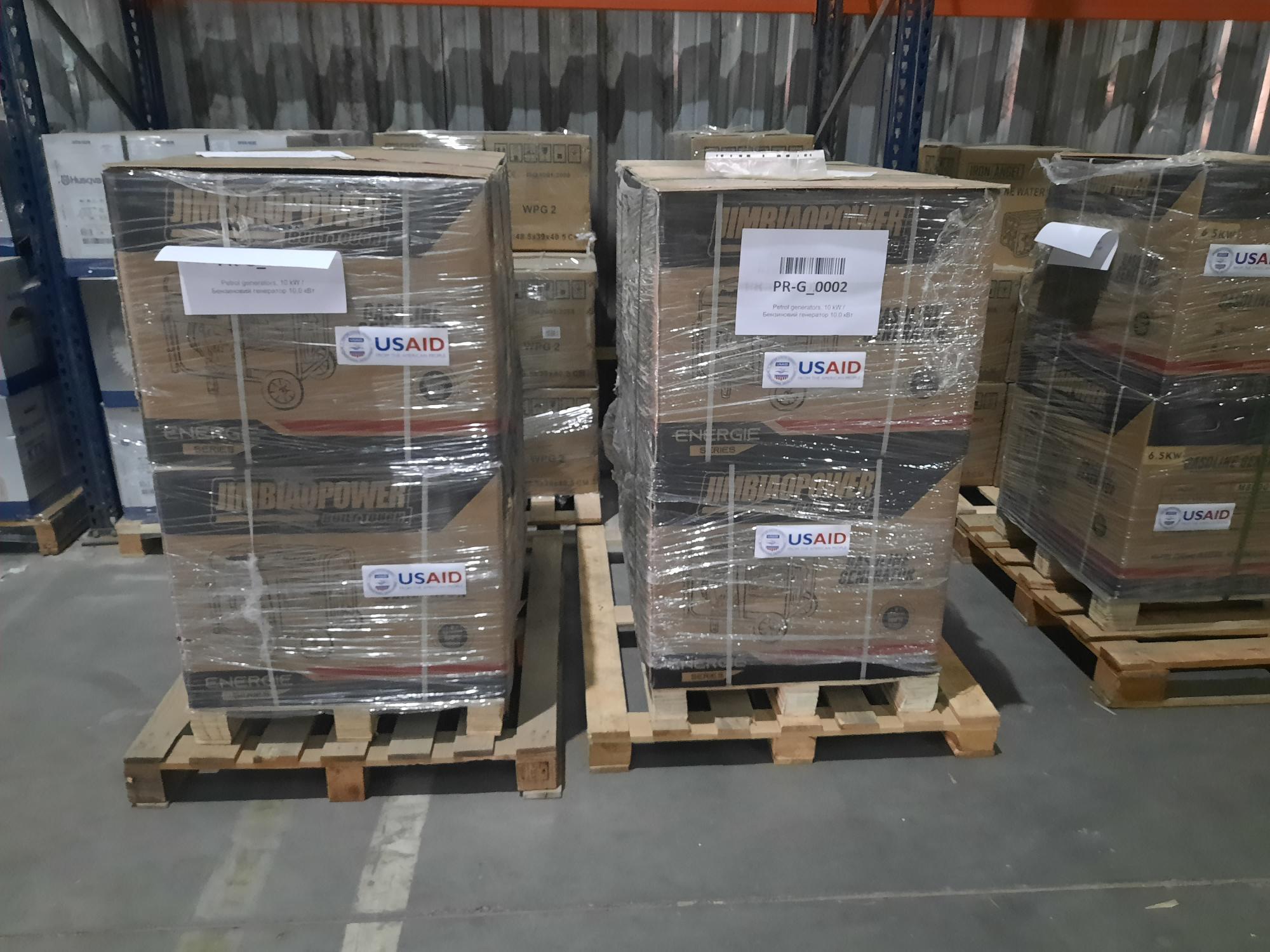
The USAID Economic Resilience Activity (ERA), at the request of frontline regional state administrations, purchased and delivered a total of 102 generators to meet the needs of communities in Donetsk, Zaporizhzhia, Luhansk and Kherson Oblasts. Donetsk Oblast State Administration received 53 gasoline generators, Zaporizhzhia and Luhansk Oblast State Administrations received 17 generators each, and Kherson Oblast State Administration received 15 generators.

“Generators are very much needed in the communities of Donetsk Oblast. Even now, after we have gone through a difficult winter, they will help to charge phones and boil water in case of shelling and power outages. We are planning to distribute them to Invincibility Points, and the rest will be in reserve until the next season with high heating needs, or we will send them to the liberated areas,” said Oksana Holovko, DOSA Investment Development Department Director.

On May 2, all the ERA-purchased generators were together delivered to a designated warehouse in Dnipro city and will be disseminated among communities of the below-mentioned oblasts to support recovery efforts.

Background: At the request of DOSA, LOSA, and ZOSA, ERA since November 2022, has provided essential items including canisters, large water tanks, chainsaws, fire extinguishers, rechargeable flashlights and tripods, motor pumps, radio stations, and portable speakers to these oblasts to help them manage emergencies that arise as a consequence of Russia’s shelling. The total amount of planned materials support assistance to the three oblasts so far is UAH 27 million.

CAREER COUNSELORS TO BE EQUIPPED TO HELP VETERANS TO OBTAIN EMPLOYMENT AND ADAPT TO CIVILIAN LIFE

04 May 2023

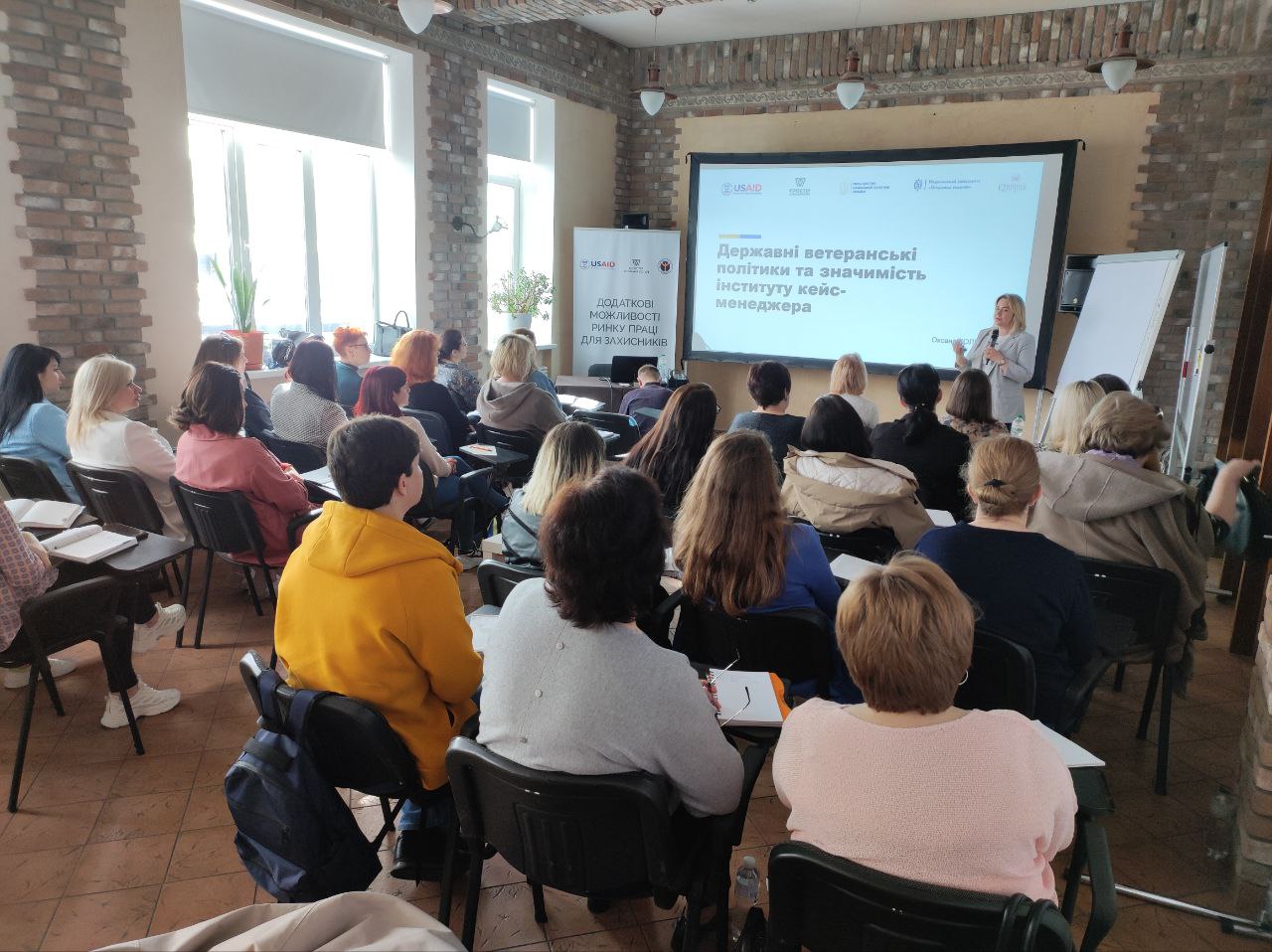
On May 3, the USAID Economic Resilience Activity (ERA), the State Employment Service, and the NGO “Prostir Mozhlyvostei” launched a training program for career counselors. The training involves sessions for specialists of the State Employment Service who will work with both female and male veterans upon their return to civilian life. The career counselors will be trained by practitioners on the specifics of communication with veterans, psychodiagnostic methods, behavioral models in crisis situations, the basics and priorities of state veteran policies, and be guided on additional opportunities for veterans in the field of education and medical services, including through working with employers who need to prepare their staff for the return of employees from the front.   


The training lasts for three days, during which the participants will learn about veterans’ current problems and needs, how to communicate with combat trauma survivors and their families, how to better interact with employers, and how to offer social services to help veterans adapt and reintegrate into civilian life after returning from the front. The program’s trainers include representatives of the Coalition of Veterans’ Spaces, the Charitable Foundation “Where We Are, There Is Ukraine”, experts who participated in the development of veterans’ policies, as well as a veteran entrepreneur, and a military psychologist. 

“In the near future, veterans will return to work, to their families, and to the communities where they lived. We need to be ready to meet them, because people with new experience will come to the communities, and they will need psychological and physical adaptation into the community. That is why we are launching this large-scale career counselors training. We have taken some elements from the American experience and are adapting them to Ukrainian realities. Our team believes that a veteran needs a family and community for adaptation and integration and that the first and most important support begins with the family. Such training is very relevant, we should not wait for victory, we need to prepare today, and think about how we can adapt people with frontline experience back into society, because often veterans’ families are displaced and become residents of a new community, so there are many more challenges they face than just employment”, said Oksana Koliada, project manager at the NGO “Prostir Mozhlyvostei”.  

Ksenia Bloshchuk, a specialist at the Kharkiv Employment Center said:

“We have been working with veterans since 2014, but now we expect the number of requests for assistance to increase significantly. Already today, we have demobilized veterans coming to us who want to have some rest after returning from the front, receive unemployment benefits, and some of them are ready to study. This is what these veterans tell our specialists. Our task is to involve a psychologist and a career counselor in this work and help veterans adapt to civilian life, help some of them to take a training course and learn a new profession, and others to get a grant for their own business.”

Natalka Sinchyshena, HR Department Director of the State Employment Center also noted.

“At the State Employment Service, we are implementing a competency-based approach to personnel management, and staff training is aimed at developing corporate competencies. One of them is proper communication with clients, including veterans, for effective employment. We are already receiving requests from demobilized veterans. Therefore, our specialists must know the state’s veteran policies, and where our niche is in them, communicate properly, and be able to identify the client’s needs. If a veteran requires assistance from other agencies, they need to understand who to refer them to for targeted assistance. After all, not all veterans who come to us are ready to work immediately. We engage our staff psychologists to prepare our personnel to communicate with veterans.”

The program is aimed at training specialized career counselors from all over Ukraine, to more effectively support veterans and their families to undertake job search, professional development, or self-employment. Over 1,000 specialized veterans’ career counselors are expected to be trained over the course of the program, which will take place between May 2023 – May 2024. Thirty trainees from all over Ukraine form the first group that started the training.  


Case managers – people who organize social services (such as medical and psychological) and communicate with employers as well as veterans’ families and know the history of veterans living in the community – will work with the career counselors.  


Background: On April 18, 2023, the State Employment Service, the NGO “Prostir Mozhlyvostei”, and the USAID Economic Resilience Activity (ERA), signed a Memorandum of Understanding (MoU) to launch the specialized training program for career counselors to work with veterans and their families.     

USAID ERA HOLDS TRAINING FOR STAKEHOLDERS OF LOCAL ECONOMY RECOVERY IN KYIV OBLAST

03 May 2023

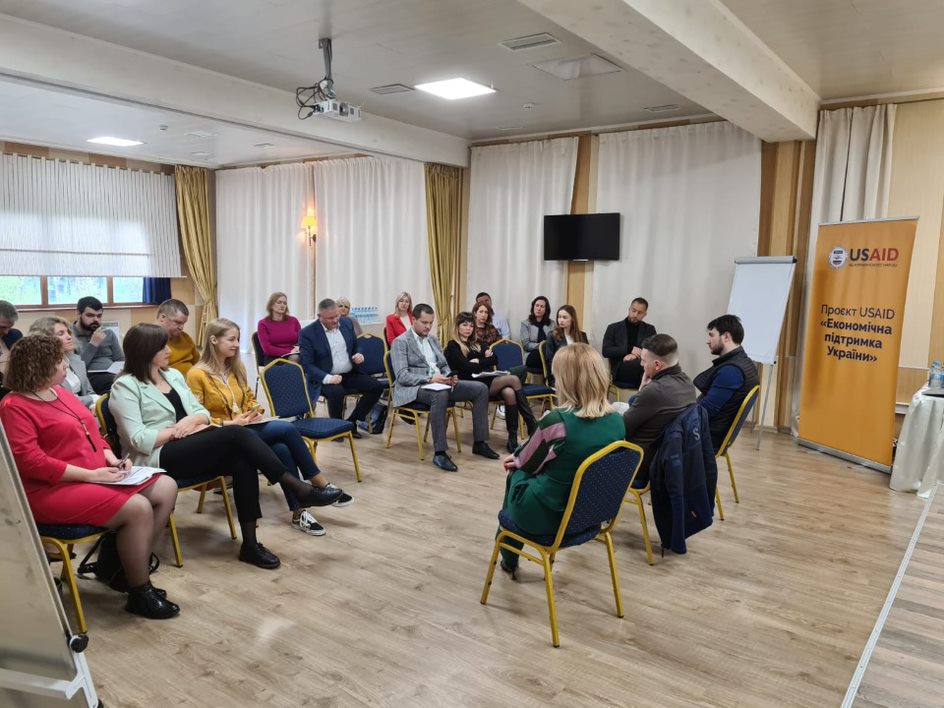
On April 27-28, USAID Economic Resilience Activity (ERA) held two training sessions on the theme “Local Economic Development in the Context of Recovery” for representatives of territorial communities in Kyiv Oblast at the request and with the support of Kyiv Oblast Military Administration. The sessions had a total of 29 participants who included representatives of Kyiv Oblast territorial communities, the Department of Economic Development of Kyiv Oblast Military Administration, and NGOs involved in local economic development. 

The event was officially opened by Vitalii Bezghin, a Member of Parliament and the Chairman of the Subcommittee on Administrative and Territorial Structure of the Verkhovna Rada Committee on Organization of State Authorities, Local Self-Government, Regional Development and Urban Planning, who spoke about the prospects and aspects of Ukraine’s recovery. 

At the training sessions, ERA consultant Oleh Levchenko presented the basic approaches to restoration and the development of recovery plans. The participants learnt about a number of local economic development tools such as clusters, cooperatives, and credit unions, and also discussed possible projects in communities and the possibility of cooperation between communities.  

In February and March 2022, Kyiv Oblast communities suffered from Russia’s full-scale invasion. Housing, infrastructure facilities, and businesses were destroyed due to the fighting. Now, even as the war is still ongoing, it is important to develop plans to raise funds not only for rebuilding, but also for projects aimed at the economic recovery of communities. This process should involve both local and regional authorities, as well as representatives of civil society organizations,” said Levchenko.