UKRAINIAN BEEKEEPING COOPERATIVE RECEIVES PRESTIGIOUS AWARD IN CHILE FOR INNOVATIONS IN BEEKEEPING

Honey
13 September 2023

PAVIK Beekeeping Production and Innovation Cooperative from Cherkasy Oblast won a bronze medal for Innovations in Beekeeping Products at ApiExpo-2023 international exhibition in Chile.

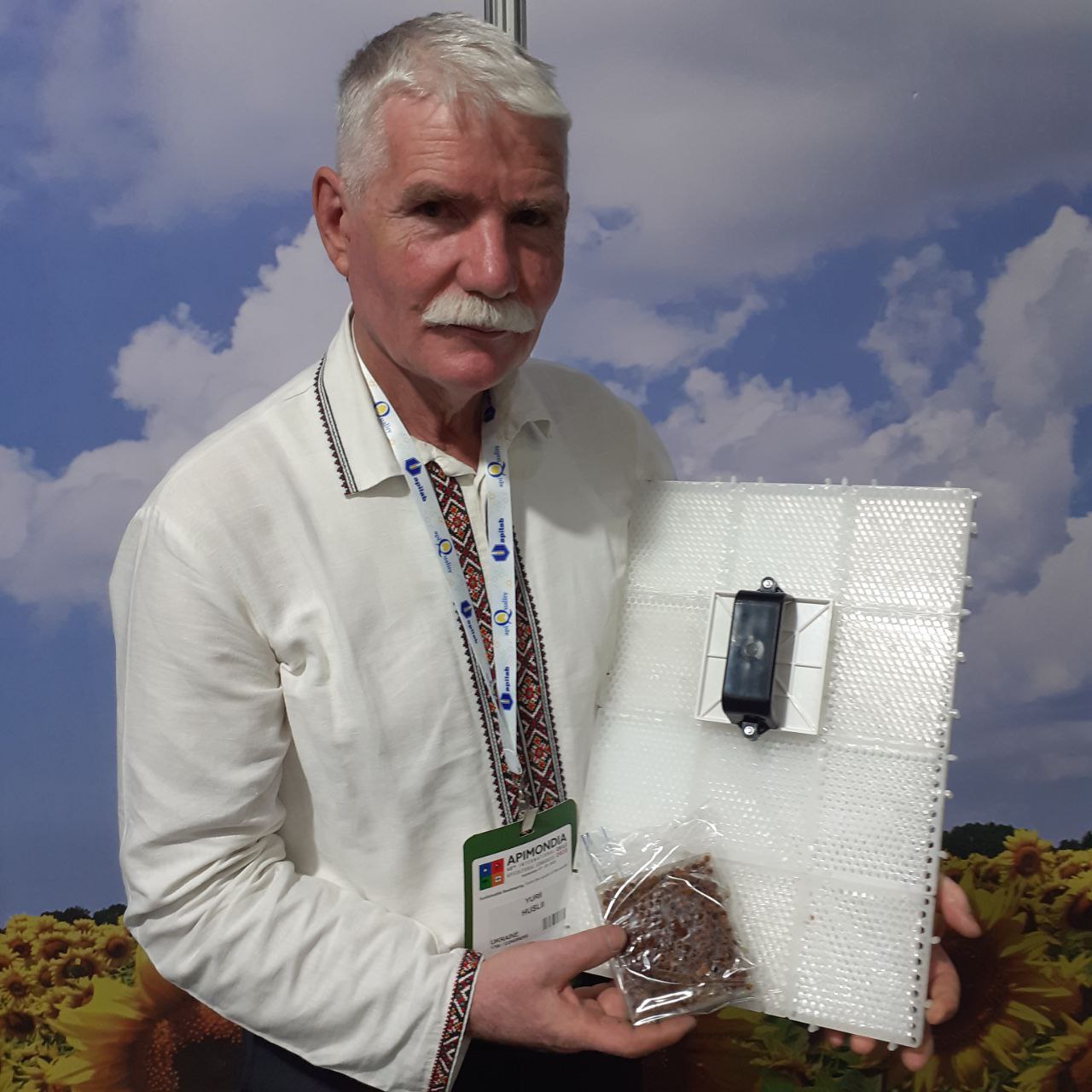
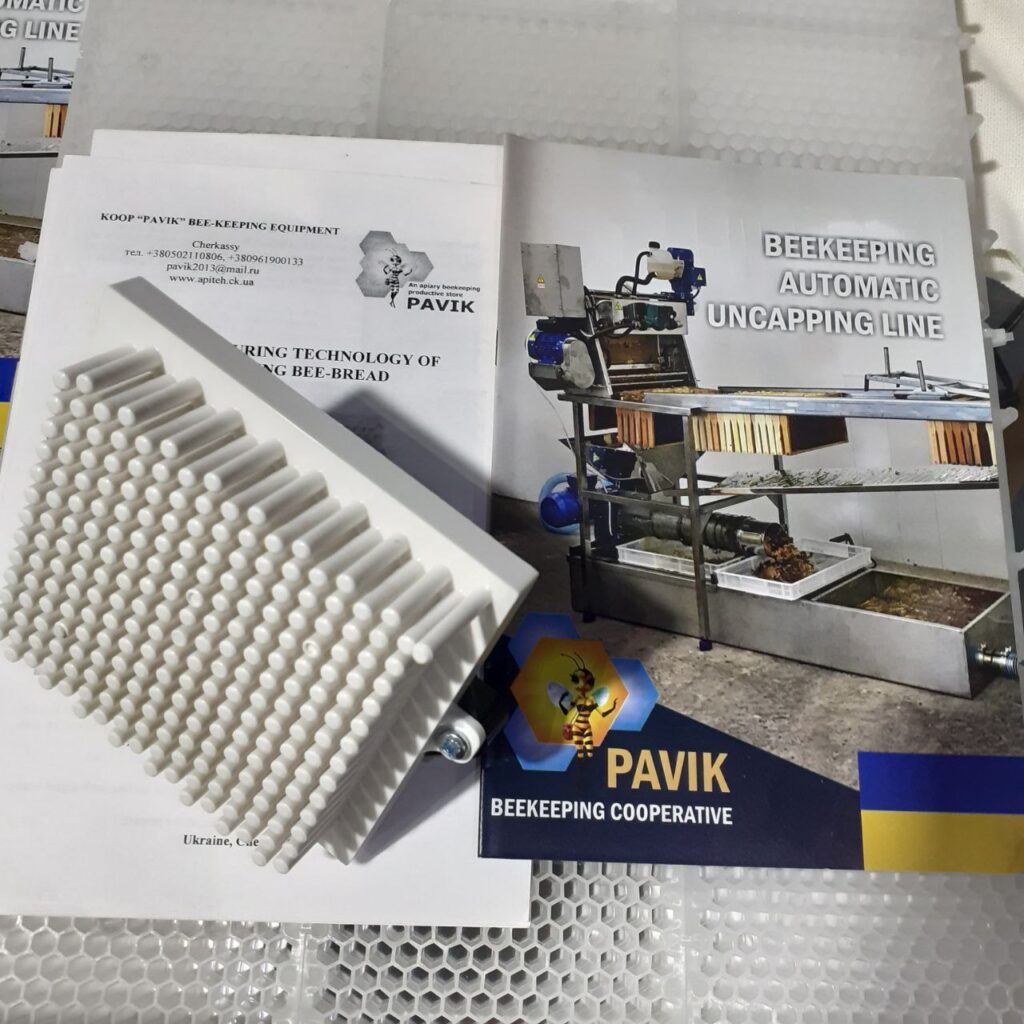
The head of the enterprise, well-known Ukrainian beekeeping inventor Yurii Huslii, received a bronze medal (third place in the world) for the industrial technology of producing bee bread. The technology was created by a group of scientists from the National University of Biological Resources and Natural Resources Management of Ukraine, and the cooperative developed its tools. This is a whole line of equipment for the production of high-quality industrial-scale bee bread at minimal cost. The technology was invented 20 years ago, but its practical implementation has only become possible now thanks to the efforts of Huslii and his team.

According to Huslii, bee bread is one of the most promising beekeeping products. It is fermented plant pollen that is collected by honeybees, soaked in nectar, put into honeycomb cells, tamped down and filled with honey.

“Many health-conscious people buy and regularly consume this valuable bee product, and our equipment helps to significantly increase its production and improve its quality. PAVIK’s equipment for industrial production of bee bread is already being actively purchased by beekeepers around the world. This technological breakthrough is the result of our joint work with leading Ukrainian scientists over the years. The equipment is relatively small and can be sent by post. We are pleased that it has received due attention from beekeepers during the 48th Apimondia International Congress and ApiExpo, in which we participated together with other beekeepers and producers,” said Huslii.

According to Ruslan Markov, USAID ERA Honey Sector Lead, the products of PAVIK cooperative demonstrated their competitiveness and innovation during ApiExpo-2023. Beekeepers from all over the world are looking at samples of its equipment, giving them the highest possible rating and showing interest in purchasing them for their apiaries. It is unfortunate that the benefits of this technology are not yet sufficiently appreciated by domestic beekeepers, who have great potential to increase their production of bee bread. Currently, the equipment is mostly purchased by foreign beekeepers.

“Bee bread is a very valuable product, the production of which can significantly increase the profitability of professional Ukrainian apiaries. While the average wholesale price of bee pollen on the domestic market is currently around UAH 200 per kilo, the price of bee bread reaches UAH 1,000 per kilo. That is, the income from the production of bee bread is several times higher than the income from the production of bee pollen at almost comparable costs. We hope that the dissemination of information about PAVIK’s international achievements will help to increase the scale of implementation of industrial technology for the production of bee bread in Ukraine,” said Markov.

With the support of USAID Economic Resilience Activity (ERA), 10 beekeeping equipment manufacturers, beekeepers and representatives of the Ukrainian Beekeepers Union took part in the international ApiExpo exhibition, which took place on 4–8 September in Santiago, Chile.
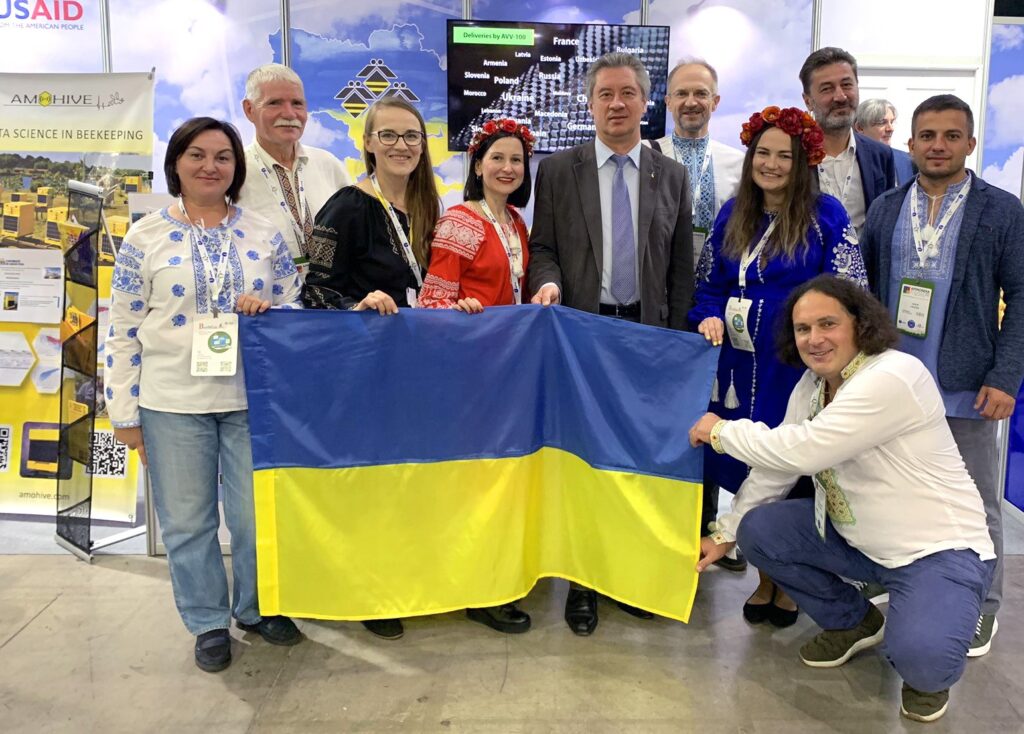
 

The delegation included representatives of 10 export-oriented Ukrainian micro, small and medium-sized enterprises – companies processing honey and other beekeeping products, manufacturers of beekeeping equipment and suppliers of IT services for beekeepers. The delegation also included two representatives of the governing bodies of the Union of Beekeepers of Ukraine and two USAID ERA specialists.
DELEGATION FROM UKRAINE TAKES PART IN THE WORLD’S LARGEST HONEY CONGRESS APIMONDIA

Honey
12 September 2023

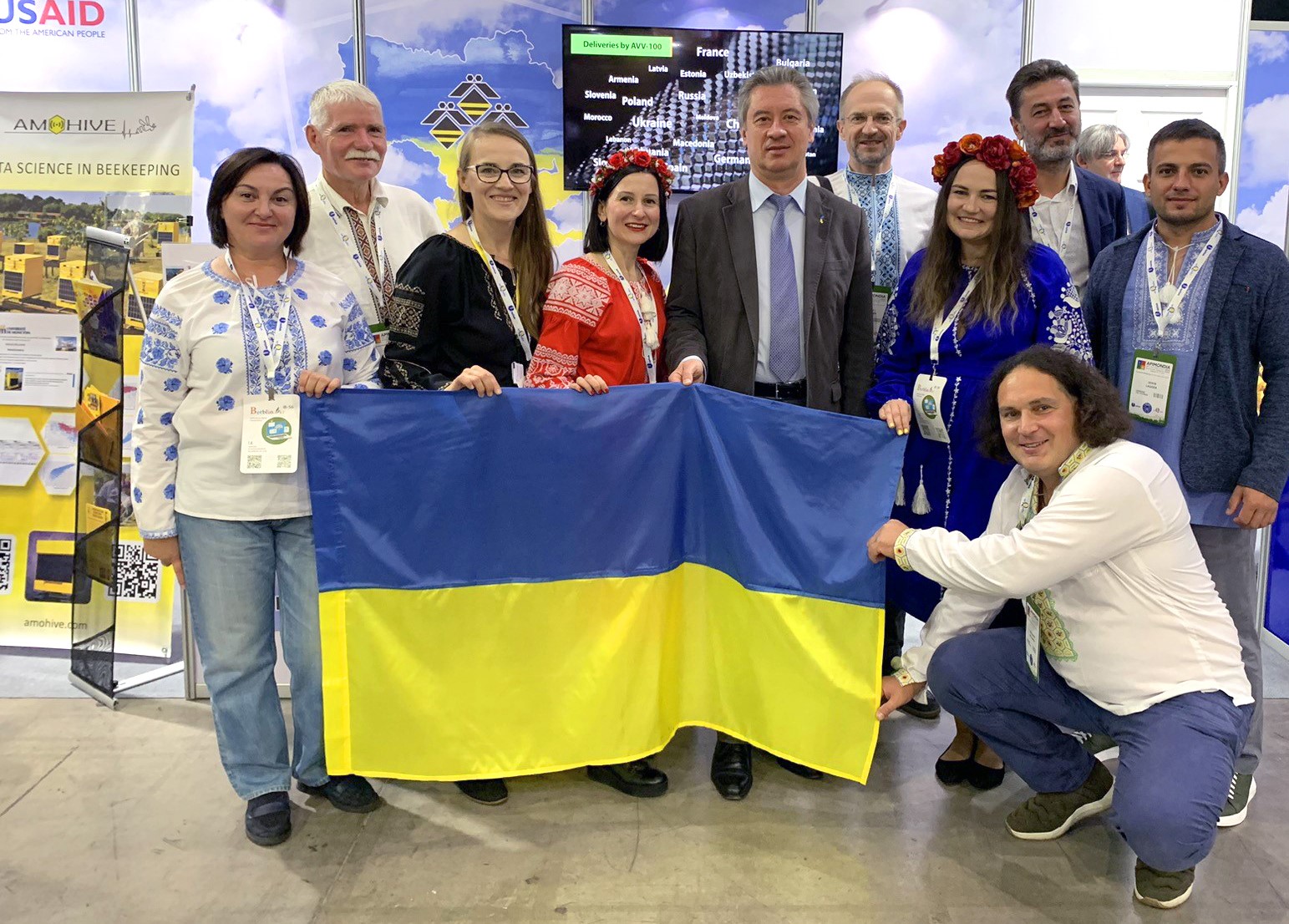
With the assistance of USAID Economic Resilience Activity (ERA), 10 beekeeping equipment manufacturers, beekeepers, and representatives of the Ukrainian Beekeepers Union participated in the international ApiExpo exhibition held as part of the 48th Apimondia World Congress.

The event ran from 4–8  September in Santiago, Chile.

The delegation included representatives of 10 export-oriented Ukrainian micro, small and medium-sized enterprises – companies processing honey and other beekeeping products, manufacturers of beekeeping equipment and suppliers of IT services for beekeepers. The delegation also included two representatives of the governing bodies of the Union of Beekeepers of Ukraine and two USAID ERA specialists.
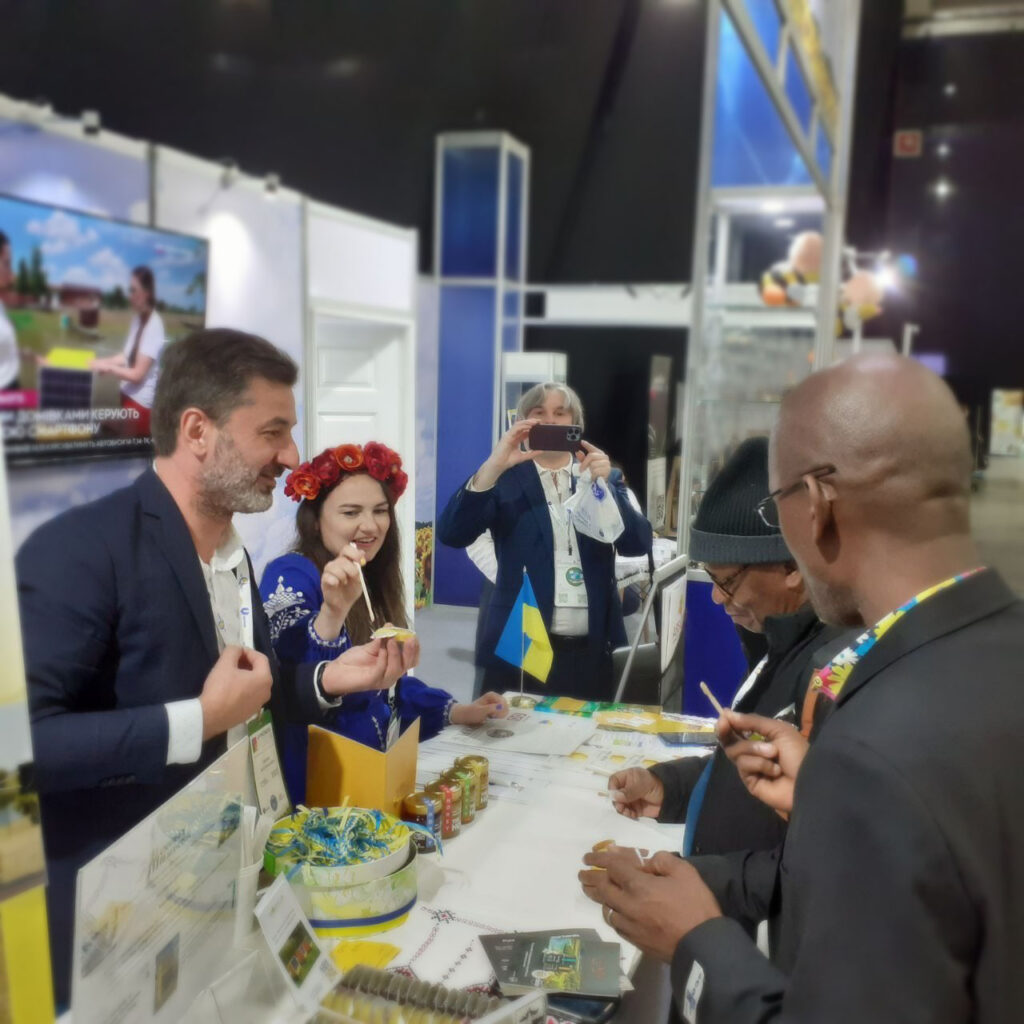
On the first day of the exhibition, Temporary Charge d’Affaires of Ukraine to the Republic of Chile Vladyslav Bohorad attended the event. He promised to assist exhibitors and representatives of the honey sector to help establish business partnerships.

One participant of the event is entrepreneur Oleksandr Stoliarov. For four years, he has been developing “Bee House” production of polyurethane foam beehives in Kyiv. Before the war, he shipped his beehives all over the world, but now, he says, logistics have become much more expensive, so he will be looking for new partners at Apimondia to supply them with modern beehives.

“Since the start of the war, sales of beehives have fallen by up to 80%, and it took us a year to get back to pre-war volumes. We sold them to Hawaii, Lithuania, and Portugal. For example, the price in Hawaii has increased fourfold, so it is not economically viable to ship there. Now our new sales channel is our beekeepers who went abroad because of the war but continue to be engaged in beekeeping there. Two years ago, we were approached by Chilean beekeepers, and I hope that they will be interested in our beehives because they will be able to hold them in their hands and assess their quality. Beekeepers from all over the world come to Apimondia, which is definitely a new opportunity and a new experience,” says Stoliarov.

Denys Lahoda, an entrepreneur from Melitopol and head of VRM-Agro, was also part of the delegation. He left occupied Melitopol, but all his new equipment for wax processing and production remained in occupation. Now Lahoda is resuming production in Kharkiv Oblast. Even before going to the congress, he held talks and arranged meetings with potential partners from Canada and the United States. Lahoda’s company is also engaged in wholesale sales of honey for export. Currently, the main buyers are the countries of the European Union: France, Croatia, Spain, Belgium, Germany, the Netherlands, and Austria. These are mainly wholesale buyers who then resell the honey in Europe or pack it in small containers and work with retailers.

“Our foreign partners are very interested in us supplying them with Ukrainian wax. Back in Melitopol, we set up a line to produce wax without impurities, pure wax, which is exactly what they want to buy from us. I have already received offers from businesses that are interested in cooperating with us, I will talk about our technology, and I hope that this trip will be fruitful,” says Lahoda.

With the support of USAID ERA, Ukrainian producers could present their products and services, understand the current requirements of the export market, and create direct business connections that translate into sales in the Ukrainian honey sector.

According to Ruslan Markov, Honey Sector Lead of USAID Economic Resilience Activity (ERA), the first day of the exhibition showed that the world’s beekeeping community is paying great attention to Ukraine’s honey business. “There are always a lot of visitors around our stand. They try samples of Ukrainian honey and other beekeeping products, look closely at modern Ukrainian-made beekeeping equipment, get acquainted with our technologies to produce high value-added goods, ask many questions and discuss possible cooperation. We already have preliminary proposals for export contracts. It can also be said that the beekeeping community is not indifferent to the problems of Ukrainian beekeepers affected by the war. Visitors to the event are interested in the state of the industry in the face of war and express their personal support for the people of Ukraine.

“Participation in such an event is very important not only for USAID ERA partner companies. It allows us to restore the position of Ukraine’s powerful honey industry in the global market. We have brought with us and are distributing information materials about other Ukrainian companies that are interested in exporting their products. The whole world needs to understand that this industry continues to operate, even in the difficult conditions of war and attempts at a naval blockade. Ukraine is ready to export its high-quality, modern products and successfully compete with other world leaders in this field. This exhibition in Chile also allows us to open our honey industry to South American countries that are not yet sufficiently aware of our potential. This is a kind of opening of Ukraine to the Spanish-speaking part of the global honey business. The contacts made during the business meetings will form the basis for the industry’s work in the coming years, and the ideas gained during communication will form the basis for strategic planning of the industry’s development for the next decades.”

The delegation members have real potential to enter new markets. Over the past year, USAID ERA consultants have been providing appropriate assistance to these partners, and organized and conducted business meetings during the event.

Participation in this exhibition will help Ukrainian beekeepers, beekeeping product processors and beekeeping equipment manufacturers to present the Ukrainian honey industry, find new partners, and thus continue their business activities, increase revenues, and contribute to the preservation and creation of new jobs.

SMART beehives from Ukraine will be installed at research apiaries in several countries

Honey
12 September 2023

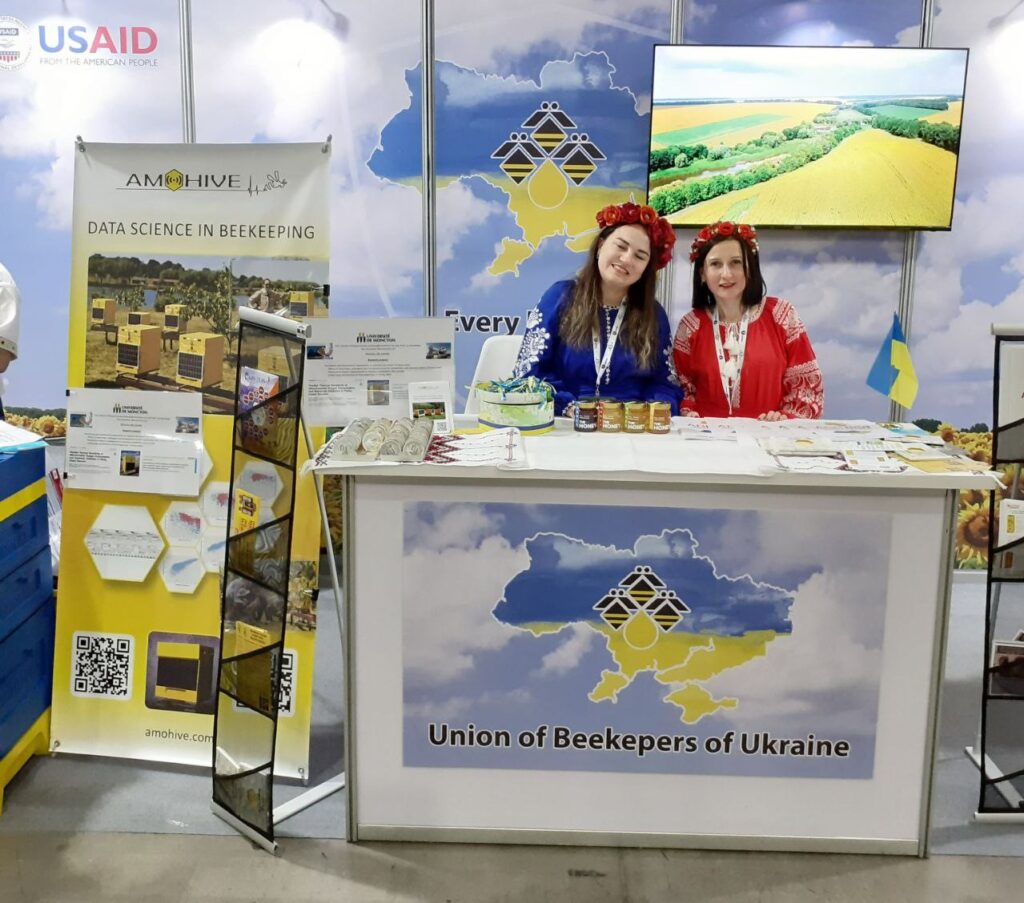
During Apimondia Chile 2023 World Congress and ApiExpo exhibition, which took place in Chile on 4–8 September, AmoHive presented its new project, AmoHive IT Beekeeping.

During the event, the development team held direct talks with representatives of universities and beekeepers’ associations from the USA, Canada, Argentina and Brazil to discuss the placement of SMART beehives in their research apiaries and their connection to a common database. This will provide a unique set of data on the life of bees in different countries, which will form the basis for analyzing problematic issues and planning the development of global beekeeping.

According to the company’s representative, Oleksandra Kurdina, their idea is very attractive not only to scientists and beekeepers, but also to young people. This technology can help motivate young people to learn beekeeping and start their own beekeeping business.

During the exhibition, AmoHive won the competition for best beekeeping photo.

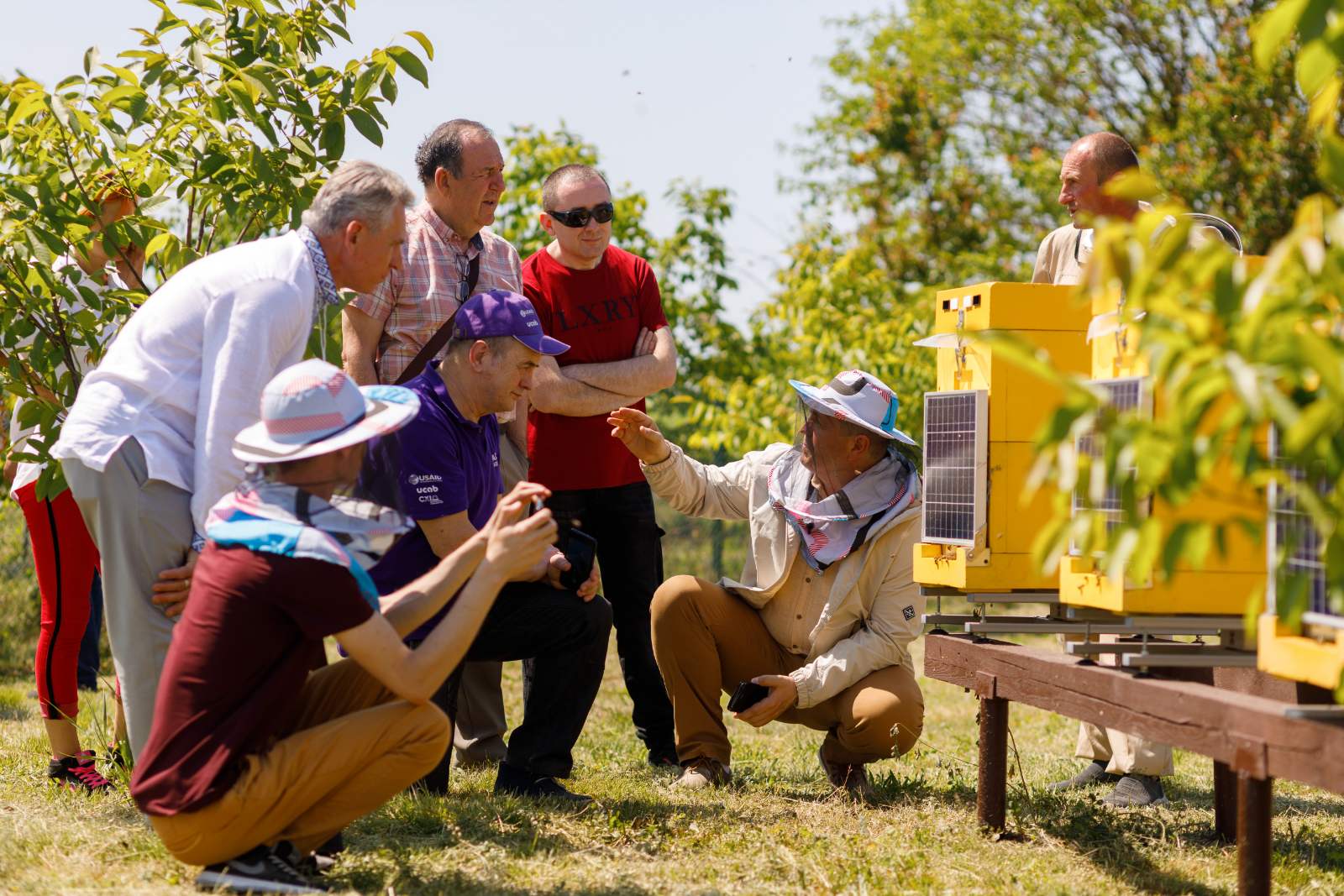
The photo received a silver medal at the 48th Apimondia World Congress. The photo shows a moment of communication between the Honey Sector Lead of USAID Economic Resilience Activity (ERA) Ruslan Markov at the first IT apiary in Ukraine with professors from Volodymyr Dahl East Ukrainian National University during a training event in June 2023.

This recognition will help to promote the initiative widely in the beekeeping community.

AmoHive has set up Ukraine’s first IT apiary in Kyiv region and plans to provide IT beekeeping training for young people in partnership with Ukrainian agricultural education institutions.

At the end of last year, this invention won an honorable mention in the Best Innovative and Technological Solution in 2022 category at the European Bee Awards. The project is based on a SMART beehive equipped with sensors that operate autonomously using a solar panel and regularly transmit a set of data to a server and mobile application. This data is accumulated and processed using Big Data analysis technology. Obtaining this information allows the beekeeper to respond in advance to humidity and temperature in the hive, which will ultimately lead to improved performance.

With the support of USAID Economic Resilience Activity (ERA), 10 beekeeping equipment manufacturers, beekeepers and representatives of the Ukrainian Beekeepers Union took part in the international ApiExpo exhibition, which took place on 4–8 September in Santiago, Chile.

The delegation included representatives of 10 export-oriented Ukrainian micro, small and medium-sized enterprises – companies processing honey and other beekeeping products, manufacturers of beekeeping equipment and suppliers of IT services for beekeepers. The delegation also included two representatives of the governing bodies of the Union of Beekeepers of Ukraine and two USAID ERA specialists.
USAID ERA Purchases Modern High-Tech Knitting Machines for Rubizhne Hosiery Manufacturer

04 September 2023

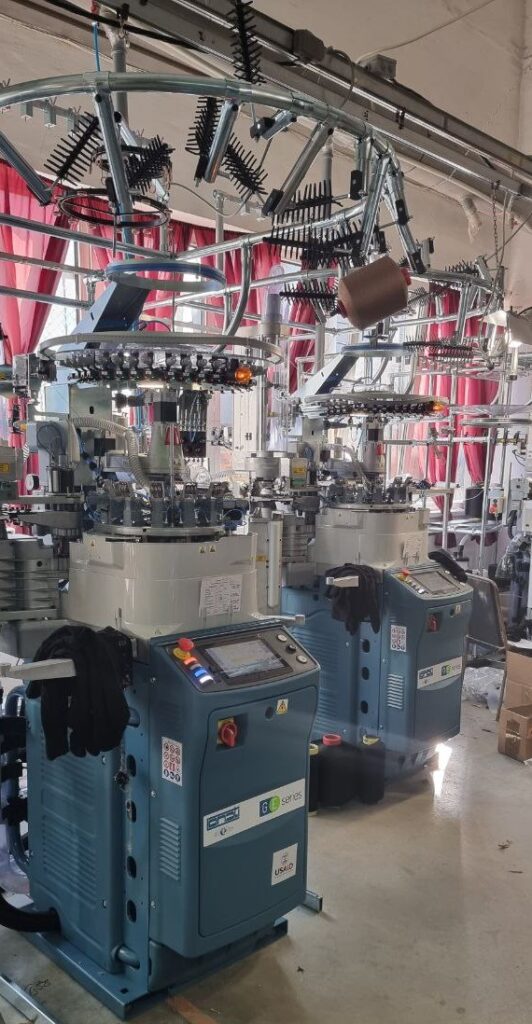
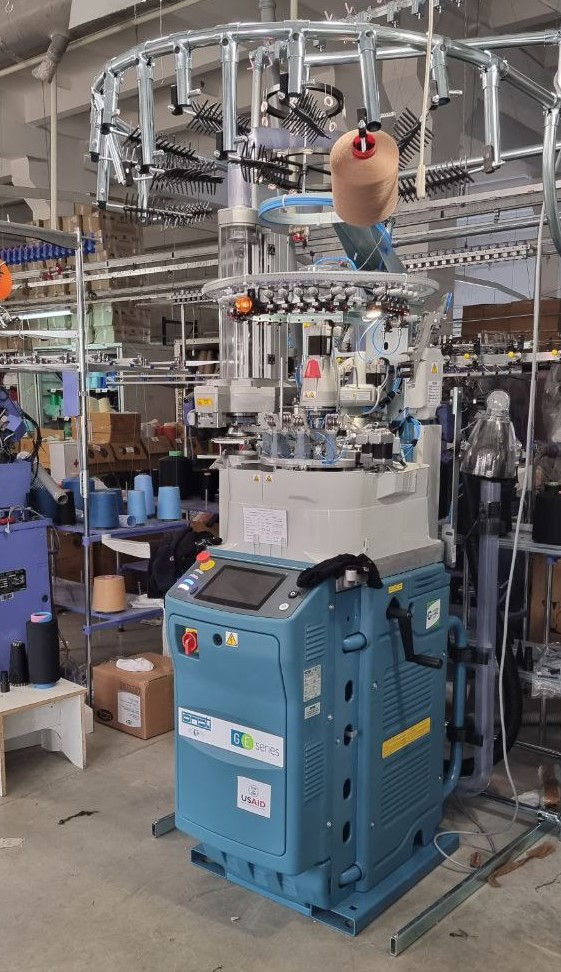
USAID Economic Resilience Activity (ERA) purchased modern high-tech knitting machines for Rubizhne Hosiery Manufacturer under a grant. This Italian equipment will allow the factory to produce premium hosiery for adults, children and babies.

“These machines will allow us to increase the volume and range of our production. We will return to implementing our strategy, which was developed with the support of USAID experts, and gradually resume production of technological professional sports hosiery,” says Olha Ushakova, the factory’s commercial director. “We currently cooperate with several Ukrainian brands for which we manufacture products, mainly adult socks. The number of machines we had before receiving the USAID ERA grant did not allow us to take large orders, and we could not produce children’s assortments and socks with a kettledown seam, which are in demand among our foreign customers. These were the products we had a great demand for and orders before the war from our foreign partners, so these machines will allow us to re-establish this production and increase our output by 25% compared to today.”

Now the machines are being installed in the shop, and socks will be knitted on them in two weeks.

Since the company has new equipment, it needs employees to work with it. Now they are looking for nine specialists, including a knitter, sewing machine operator, repairman, packer, and hosiery molder.

USAID ERA is also supporting the company’s efforts to develop a human resources administration system as part of the Business4Ukraine initiative. For this purpose, the company engaged a specialist working at the University of Oxford, Maryna Stiahailo, who has extensive experience in the human resources management sector in Ukraine. In addition, USAID ERA trained the company’s staff to use modern artificial intelligence service ChatGPT, which has significantly increased the company’s productivity in communications and marketing.

The company is also working on a new line of sports socks under the MOVIGO brand, which was developed by USAID ERA specifically for the factory.

Rubizhne Hosiery Manufacturer is a relocated enterprise that completely lost its production in Rubizhne as a result of Russia’s occupation and moved to Lviv. In October 2022, with the support of USAID ERA, Lviv City Council, and the help of business partners, the company resumed operations. The factory started with a team of 17 employees. USAID ERA paid for the annual lease of the production facility, which helped the company focus its efforts on other production processes at the initial stage.

To resume sock production, the factory received a loan from its business partners and purchased 20 knitting machines. It also received other auxiliary equipment through grants from the International Organization for Migration, Danish Refugee Council, Ukrainian Business in Action Project from the European Fund Development Program, Women’s Perspective Center, and Easy Business Grant.

The factory currently employs about 50 people.


USAID ERA helps Agromino increase grain exports

31 August 2023

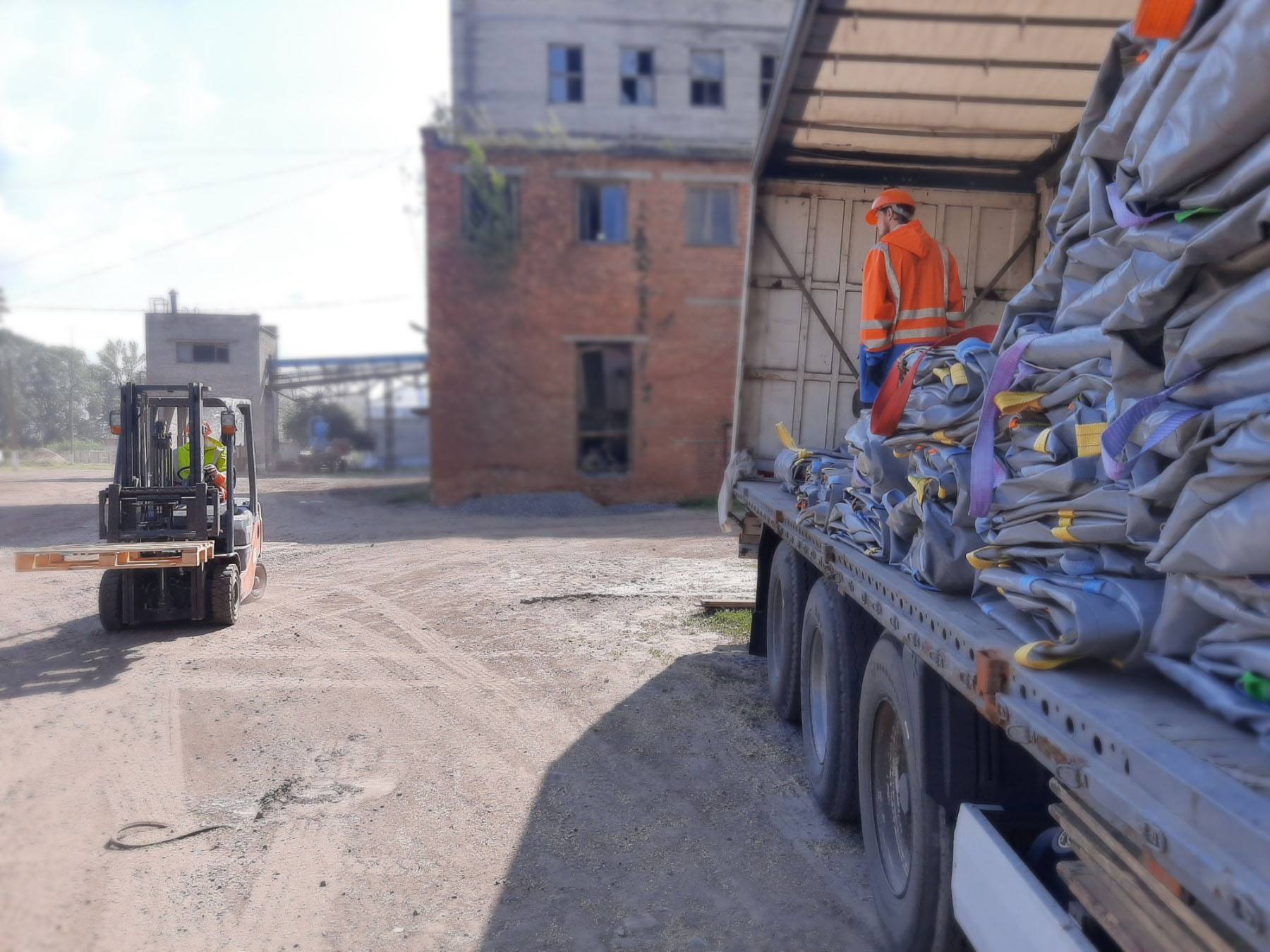
USAID Economic Resilience Activity (ERA) has purchased 300 maxi bags for Agromino, a grain company with a full cycle of production and export of agricultural products.

A maxi bag is a large reusable bag with a volume of 18 cubic meters for transporting or storing grain and other bulk materials. It can hold 14 tons of grain. The bags are manufactured by Ukrainian company Аrivapak.

This technology allows five wagons to be loaded daily, which is approximately 350 tons of grain. All of this affects the cost of production and allows Agromino to increase grain shipments.

The use of maxi bags allows Agromino to transport grain not only by rail, but also by open trailers when grain trailers or specialized containers are not available.

This is the second batch of maxi bags that USAID ERA has delivered to Agromino. The first 250 units were delivered in February 2023. The company uses them to transport grain from its own elevator to customers in the European Union.

“We used to load grain in 800 kg bags. These maxi bags will help us load the wagons faster and send them to our customers in the EU,” says Oleksandr Andreiev, Technical Director of Agromino. “We already have experience of using maxi bags. We have loaded and unloaded them several times, and none of them have broken on the way. We are convinced that these are reliable bags that help us to keep the grain clean and transport it closed.”

Transporting grain in this way helps keep it clean, and the use of large bags helps to load wagons faster. Over the six months of using maxi bags, the company has shipped about 13,000 tons of grain.

Agromino currently cultivates 42,000 hectares of land across Ukraine. In October 2022, the company resumed operations in the liberated territories where its two elevators are located.

This year, the company plans to export about 200,000 tons of grain. In 2022, the company exported approximately 65,000 tons of grain by road and land. This expected increase is due to the fact that this year the company started purchasing grain from farmers, whereas previously it exported grain only from its own production.

USAID ERA is promoting a new technology for transporting grain by maxi bags in Ukraine. These bags have been used for more than 10 years in the European Union and the United States to transport bulk cargo. However, for Ukraine, using them to transport grain is a new technology. The bags are made of polymeric fabric and guarantee the tightness of the cargo (grain) and its protection during transportation.

Maxi bags are already being used by USAID ERA partner companies N`Unit and KRM AGRO.

Assistance to agricultural producers and infrastructure companies is part of USAID Agriculture Resilience Initiative – Ukraine. It aims to help Ukraine increase its capacity to produce, store, transport, and export grain.

For more information about the Ukrainian manufacturer of maxi bags, please follow the link: https://arivapak.com/


Melitopol-based company successfully resumes operations in Lviv Oblast

21 August 2023

Citius S armored glass manufacturing company has been displaced twice. Despite relocations and loss of equipment and market share, the business owners are successfully developing production in Lviv Oblast. Thanks to consultations from USAID Economic Resilience Activity (ERA), the company is undergoing a transformation, and their customers are becoming brand ambassadors.

In Melitopol, Citius S Limited Liability Company produced armored and architectural glass for non-standard agricultural machinery and yachts since 2014. The company was also engaged in the refurbishment of cars. They produced vehicles for banks and ambulances, and provided all the equipment inside.

This is the second relocation for the company. In 2014, they fled Crimea to Melitopol, and now, during Russia’s full-scale invasion of Ukraine, they have moved to Lviv Oblast.

“The capture of Melitopol by Russia’s military in 2022 was very fast. We could not take the equipment out because it was very heavy and needed to be dismantled. At the time, we were thinking about the most important thing: how to save people. We warned all our employees, but unfortunately, not everyone decided to leave. Only nine families of our employees left with us. We completed the legal relocation in May 2022. We were able to produce the first goods in September 2022. It turned out that we could hardly take anything out. So, we were waiting for equipment at the new location for a very long time,” says business owner and manager Oleksii Serov.

Citius S resumed production thanks to a soft loan and customers who placed orders in advance.

“I’ll tell you one story. At the beginning of the war, most banks donated their cars to the territorial defense to use. One of these cars, which we had converted, met a convoy of tanks. It was shot at by a tank machine gun. Of course, the car was not designed for this, but both the glass and the armored capsule survived. It was this bank that asked us to restore it, they were convinced of our quality,” says Serov.

“First, we resumed production and assembled our own kilns. We opened one 600 sq.m workshop and rented another of 1,800 sq.m. We have fully restored all the steps of armored glass production.

“Since we moved and had almost nothing with us, we had to give one car we had left as collateral to the bank. We sold the other car to make the first payment for the autoclave. We had no resources of our own. Everything we managed was due to our frantic activity. We looked for all grants, opportunities, and support programs. We constantly monitored social media and telegram channels. We took out a soft loan under one of the government support programs and received support from Lviv Oblast State Administration,” adds Serov.

The company started looking for grant opportunities and, as of July 2023, had received nine grants – from Lviv Oblast State Administration, the International Organization for Migration, United Nations Development Program and other donors. The grant money was used to purchase a generator, a hydraulic crane, a compressor, and the necessary hand tools.

Thanks to consultations provided by the All-Ukrainian Association of Business Executives with the assistance of USAID ERA, the company began transforming and adapting its business processes to the new environment. Consultants helped them find the necessary legal support, contractors, and grant opportunities. Now the company’s priority is to promote itself, advertise online and rebuild its website, as it was forced to close the old site for the safety of those who remained in Melitopol.

“With the help of consultants, we gained connections of the same scale as those we had been accumulating in Melitopol over many years. During the consultations, we realized that we didn’t need a sales department to further develop our business, so we abandoned it and created a representative structure. Our clients became our representatives, which gave us a significant boost in development. In other words, we work on a win-win basis, when everyone benefits from cooperation. As a result, when we shifted our focus to the client, we gained many more clients. We continue to develop the area of customer representation. We are also actively working on supplementing the further development strategy and appropriate market positioning,” says the company’s director about the benefits of business consultancy.

The Serovs say they have adapted to the new location and plan to further develop their business. They have no plans to return home after Melitopol is liberated.

“We are starting from scratch, because everything was taken away from us. To survive, we must move frantically. We are really very active, for example, we have already received nine grants. Our business is growing qualitatively – we have more machines, we have taken care of the welfare of our employees. We have a friendly team. Everyone knows what they are working for. At first, locals were watching us closely and were reluctant to respond to our vacancies. But in the end, they saw that we were serious and joined the team,” says Anastasiia Serova, Deputy Marketing Director. “We have no plans to close the plant that has already been established in Lviv Oblast; on the contrary, we plan to look for premises for purchase and further development here. After Melitopol is liberated, we will have much more additional opportunities – we may leave the plastic workshops at home and the production of ambulances. In Lviv Oblast, we will develop other areas of work. Time will tell.”