Relocated manufacturer of health products receives USAID ERA-facilitated consultation to market their new product line  

26 May 2023

The Globus Research and Production Company received free “Quick Start” consultation from the NGO Podil Regional Development Agency, under the Economic Development Bridges initiative, which was set up with assistance from the USAID Economic Resilience Activity (ERA). Experts from the NGO Podil Regional Development Agency are providing these consultations to entrepreneurs such as Globus, who have relocated their businesses to Vinnytsia, Rivne, Ternopil, Khmelnytskyi, and Cherkasy oblasts following Russia’s invasion.

Globus is a manufacturer of products made from natural ingredients for livestock, as well as products for human health and hygiene. Last year, the company relocated its business from Kharkiv to Mohyliv-Podilskyi, Vinnytsia Oblast. In fact, they had partially moved to Vinnytsia region in 2014, and then relocated their production facilities completely following the full-scale invasion.

The company’s current focus areas are the production of hygiene and health products, agribusiness, and fertilizer production. However, the main product they offer now is an absorbent, which is useful if you can’t wash your feet or socks, and prevents hyperhidrosis, bedsores, and fungus infection. According to company representatives, this product is the best in Ukraine.

“After relocating the business, our company faced problems with product promotion, in particular, the “Sushkar” product, an absorbent for use inside shoes that prevents foot diseases. An expert helped us find a solution to the problem as part of the “Quick Start” free consultations,” says Yana Yanenko, the company’s commercial director.

During one of the consultations, marketing, promotion, and Social Media Marketing expert, Oleh Horobets, reviewed the company’s current promotion and sales plans and activities and found that the main obstacle to successful sales was the absence of “Sushkar” on the list of public procurement goods, and the fact that potential buyers were not aware of its existence at all.
Horobets advised focusing on organizations with a medical specialization and holding meetings, presenting the product, and showing the experience of using it in specific cases. He also advised media promotions highlighting the effectiveness of this domestic product in preventing foot diseases.

The company has already begun to implement these recommendations and held several presentations with pharmacies and hospitals, and has since received some preliminary agreements from these potential clients to order the product.

Background: The Economic Development Bridges initiative, supported by ERA, has been running since December 2022. It provides advice to relocated businesses on marketing, legal issues, accounting services, restoring sales and supply chains, grant opportunities, human resources management, recruiting, finding premises and locations, promotion, marketing, and social media marketing. So far, 42 entrepreneurs have already received consultations.


DaLaS Garden Center in Brovary Raion is helping to green the liberated territories of Kyiv Oblast

25 May 2023

DaLaS Garden Center in Brovary Raion is helping to green the liberated territories of Kyiv Oblast. The center was partially damaged during Russia’s shelling last year, but the owners restored it and are now actively helping hospitals and kindergartens to become green and attractive again. They also offer discounts to those who want to plant bushes or trees in their communities. 


DaLas Garden Center is a member of the Network to Protect the Cultural Heritage of Ukraine through a Solidarity Economy, which was created with USAID Economic Resilience Activity (ERA) assistance. The network promotes cooperation between local businesses and helps to implement joint volunteer projects. 

USAID ERA delivers grain loading equipment to support Ukrainian grain exporter Grain Alliance

23 May 2023

On May 22, the Ukrainian grain exporter Grain Alliance received loading equipment – three (3) telescopic loaders, and two (2) tractors – from the USAID Economic Resilience Activity (USAID ERA) within the framework of the USAID Agriculture Resilience Initiative – Ukraine (AGRI-Ukraine). This equipment will help speed up the export of Ukrainian grain.

“New realities in logistics require agricultural producers to find new ways to ship grain. One of these solutions is the transportation of grain in big-bags, the use of which is rational when involving powerful machinery. According to our calculations, due to the capabilities of the new equipment, we will be able to increase the volume of grain transportation at our elevator units by 70,000 tons per season. I think that the shipment capacity of just our Berezan (grain) elevator will double,” comments Viktor Bezsmertnyi, general director of Baryshiv grain company, Grain Alliance.


Grain Alliance has 20 years of experience in impactful agriculture. It is one of the largest exporters of grain, and therefore plays an important part in shaping the role of Ukraine as one of the world’s leading food exporters. Currently, the company cultivates about 60,000 hectares and has six grain warehouses where it can dry and store more than 300,000 tons of grain. In May 2022, Grain Alliance acquired a grain logistics hub in the city of Čierna nad Tisou in Slovakia. This allowed Ukrainian grain producers to transport grain by rail without interruption.

In March 2023, Grain Alliance, and USAID announced a new partnership to address logistical challenges with grain exports caused by Russia’s full-scale invasion. The total amount of investments is several million US dollars, which will be directed to the development of warehouses for grain storage and the expansion of the agricultural infrastructure of Ukraine.

Over the next few months, Grain Alliance will also receive from USAID ERA other equipment purchased under AGRI-Ukraine, including temporary storage, grain bunkers, large bags and equipment for their filling.

Bill Mays, ERA AGRI Director, noted:

“The latest grain handling equipment will allow Grain Alliance to quickly expand its systems and the ability to move grain throughout Ukraine, as well as export grain for many years.”

As part of AGRI-Ukraine, USAID committed USD 100 million to increase Ukraine’s capacity to produce, store, transport and export grain to ensure global food security in times of war. USAID ERA is one of the implementing partners of AGRI-Ukraine, with a total budget of more than USD 30 million to increase the potential and capabilities of the Ukrainian infrastructure for the export of agricultural goods.

USAID ERA supports renovations to dormitory to house displaced persons in Berezan

22 May 2023

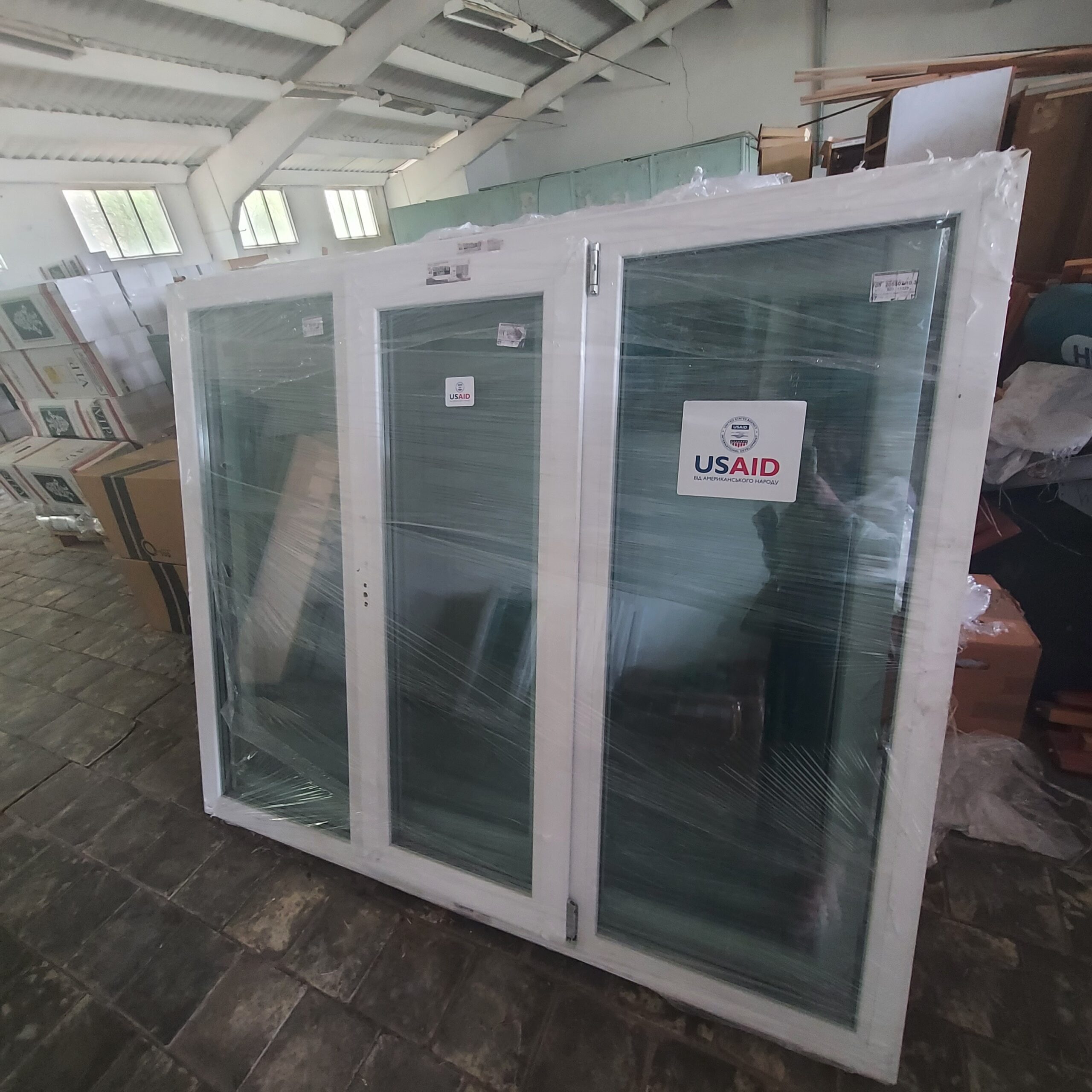
In Berezan, Kyiv Oblast, a dormitory is being renovated, with the construction materials – which cost over 4.5 million hryvnias – provided by the USAID Economic Resilience Activity (ERA).  The Rotary Club Kyiv International approached the local community with the idea of renovating it. With this request accepted, the organization turned to ERA, with the two parties signing a memorandum of understanding regarding this work, in September 2022. ERA inspected the building, developed a capital repairs plan, and purchased the necessary construction materials.

“Sometime in the past, builders lived in this building. They built housing for displaced people from Chornobyl after the accident at the Chornobyl Nuclear Power Plant. Thirty years later, there are again displaced persons in Ukraine, but now because of Russia’s invasion. The building needs to be repaired so that people can feel comfortable in it. Therefore, we undertook this restoration work,” says Serhii Rodynskyi, a representative of the  “Chornobyl” Rural Consumer Society which owns the building, and whose private enterprise is responsible for the renovations.

Continue reading “USAID ERA supports renovations to dormitory to house displaced persons in Berezan”

STUDENTS CREATE DIGITAL CLOTHES AT HACKATHON IN RIVNE OBLAST 

19 May 2023

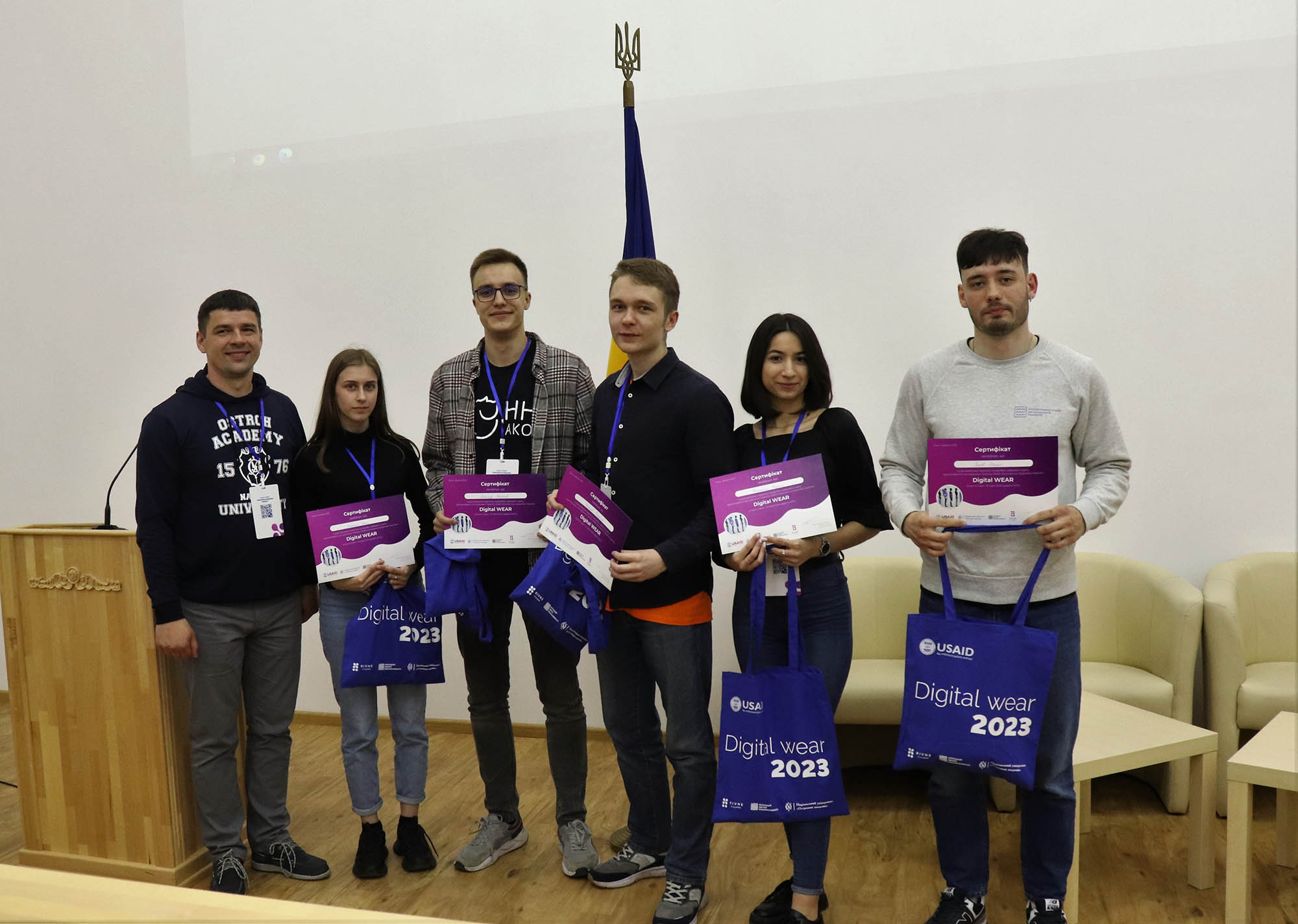
The “Digital Wear” hackathon held in Rivne at the Ostroh Academy on May 4 united 50 students from educational institutions of Rivne, Zhytomyr, and Lutsk, as well as mentors, the jury drawn from IT companies and from the Association of Light Industry, and representatives of the Rivne Oblast State Administration. The event was held with the assistance of the USAID Economic Resilience Activity (ERA) and Rivne IT Cluster.

Ten teams presented their digital clothing concepts, which included interesting ideas for smart fitting rooms, fabulous virtual images, stylists using artificial intelligence, and others.

“The event is very unusual, as the idea of combining the IT and light industry is a challenge. I’m glad that all the teams were creative and came up with original ideas, so it was quite difficult for us to choose our favorites. I am sure that this event has opened the door to new projects for us, as we were able to meet specialists from different industries and establish partnerships and cooperation,” said hackathon judge Mykhailo Boiko from FuGas.

The judges rated the participants’ works according to the following criteria: relevance to the topic, innovation, ability to implement the idea, presentation, and clothes’ functionality.

The winners of the hackathon were “Itivtsi” from the Rivne Regional Scientific Lyceum, “Vag Power” and “Crazy Snails” from the National University of Water and Environmental Engineering, students of the Noosphere Engineering School, and “Bee5” from Lesia Ukrainka Volyn National University.

“Our team is extremely pleased to participate in the Digital Wear hackathon. We had an opportunity to meet like-minded people who want to develop modern digital fashion design together,” says Maria Nazarchuk, a member of the winning Bee5 team.

Continue reading “STUDENTS CREATE DIGITAL CLOTHES AT HACKATHON IN RIVNE OBLAST “

The construction sector has the capability to rebuild Ukraine

19 May 2023

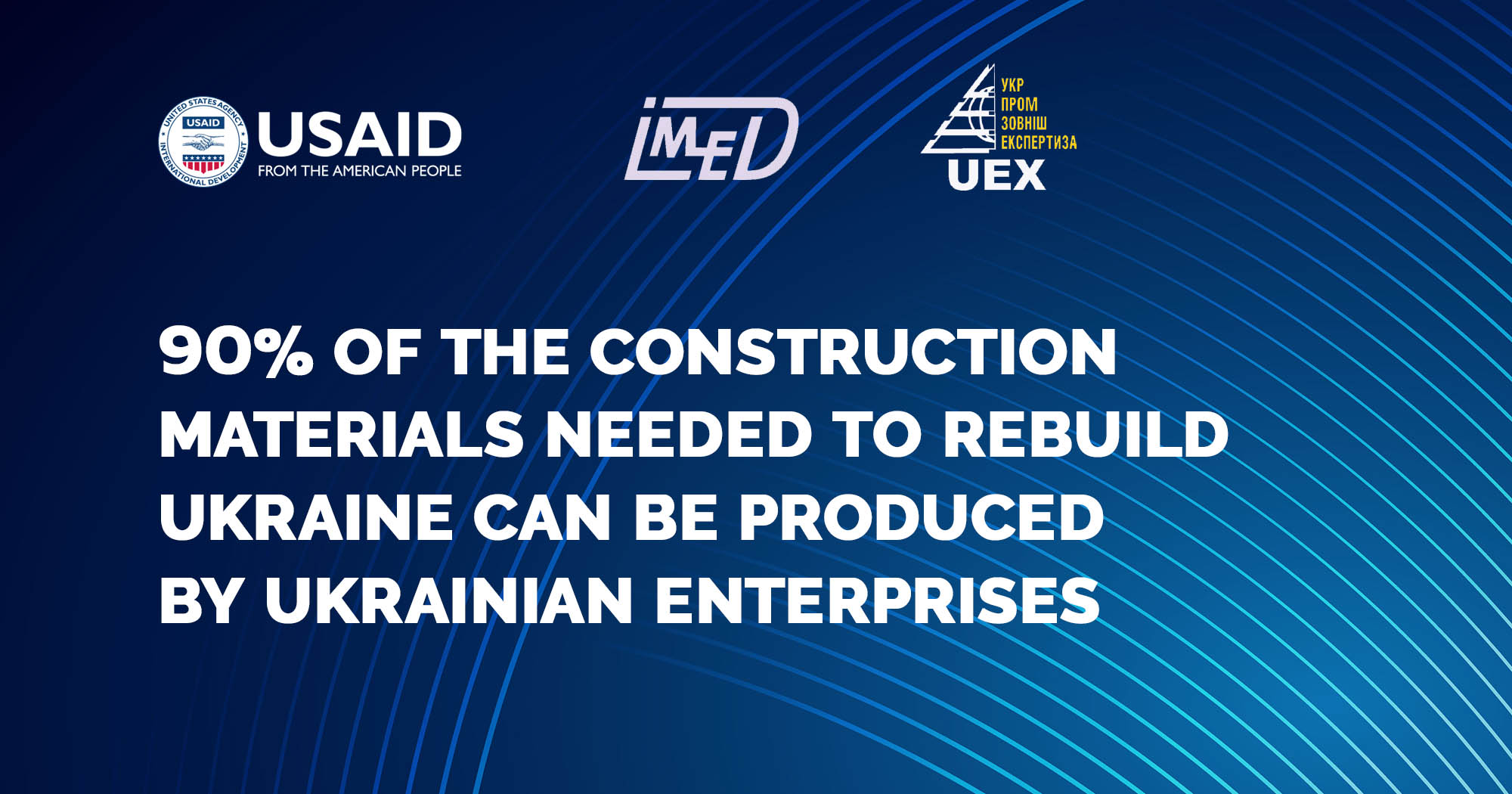
Almost 90% of the construction materials needed to rebuild Ukraine can be produced by Ukrainian enterprises. This is evidenced by the results of research conducted by specialists from the NGO Institute of International Economic Research and the State Enterprise Ukrainian Industry Expertise with the support of the USAID Economic Resilience Activity (ERA).

Although the war is still ongoing, Ukrainian authorities and western partners are already in the process of considering possible solutions for reconstruction.  Without such solutions, it is impossible to establish normal living conditions in Ukraine, return millions of refugees to the country, and reduce the gap in economic development and income compared to the EU countries.

“In 2022, we supported a research work by the Kyiv School of Economics (KSE) regarding the scale and cost of damage to infrastructure and residential buildings in Ukraine. In this research, KSE found that as of November 2022, the damaged facilities will need construction materials and equipment worth about USD 62.8 billion”, says Brian Milakovsky, Deputy Chief of Party of USAID ERA.

He noted further:

“We immediately thought: how much of the required building materials can Ukraine produce domestically? Is it possible to spend money on these materials within the Ukrainian economy? Or would the only option be to import the necessary materials? To answer these questions, we involved specialists from the NGO Institute of International Economic Research and Ukrainian Industry Expertise. During the research, they analyzed the production capacity of Ukrainian building materials’ factories during the war. They found that about 15% of the construction sector’s businesses were damaged or destroyed, but this sector maintains a very high production capacity of a wide range of construction materials and can provide up to 90% of the required materials”.

To develop proposals in this area, an assessment was made of the volume of products needed for reconstruction and the readiness of the building materials sector to meet this need. It is worth noting that as of November 2022, the total cost of construction materials and equipment for the reconstruction of buildings and infrastructure is estimated at $62.8 billion. If these materials are produced in Ukraine, the economy will receive significant support. Using Ukrainian-made construction materials could help preserve an estimated 100,000 jobs and facilitate $5.6 billion in wages and $4.4 billion in tax revenue. Ukraine will require less external macroeconomic aid from donors, and the total cost of reconstruction will be less due to lower prices for Ukrainian-made building materials.

In general, it is estimated that Ukrainian manufacturers could provide 90% of the construction materials needed for reconstruction. Specifically, the results of the study show that the capacity to produce sheet glass or equipment for electrical distribution boards has been largely destroyed. These materials are imported from the EU, which ultimately affects their cost. At the same time, Ukrainian enterprises are currently investing in the construction of factories which will produce these absent products such as glass, aerated concrete, and dry building mixtures. New facilities in Ukraine could reduce the cost of this equipment and materials for use in the domestic market.

Among the problems identified by the research are constant power outages due to Russia’s destruction of energy facilities. Access to finance to replenish working capital and capital investments is also a barrier. Some producers also pointed to receivables from construction companies and the potential loss of key engineering specialists due to conscription into the Armed Forces. The main barriers to investment activity are high military risks, inability to obtain loans, no understanding of the long-term market, and the high cost of connecting to the power supply system. At the same time, investment activity continues because Ukrainian companies want to capture the opportunities presented by reconstruction.

Volodymyr Vlasyuk, Director of the State Enterprise Ukrainian Industry Expertise noted,

“Ukraine and partners of Ukraine can be confident in the ability of the domestic construction materials sector to meet most of the needs of the country’s post-war reconstruction. Donor organizations and credit institutions of Ukraine can focus on this domestic production potential when planning their aid support.”

This research is crucial for donors and international financial institutions (IFIs) for two reasons. First, the capacities of domestic producers of building materials are sufficient to play a leading role in donor-funded reconstruction. Second, it highlights opportunities for technical assistance and improved access to finance to address specific constraints to the sector’s further recovery and growth. The international community can look to Ukraine’s construction materials sector as a bright spot in its war-affected economy and an early target for support.

To access the results of the research, please follow this link.

About USAID ERA: USAID Economic Resilience Activity (ERA) was designed to foster Ukrainian economic resilience in the face of Russia’s invasions. ERA supports displaced businesses and persons, and the liberated areas of Ukraine, to rebuild their lives and livelihoods and capitalize on entrepreneurial opportunities; and local institutions to rebuild a resilient post-war economy. Furthermore, ERA now implements a US government interagency Agricultural Resilience Initiative (AGRI) to increase the export of agricultural commodities overland via Europe by rail.