RUBIZHNE HOSIERY MANUFACTURER ACCEPTS PRE-ORDERS FOR SOCKS

22 September 2022

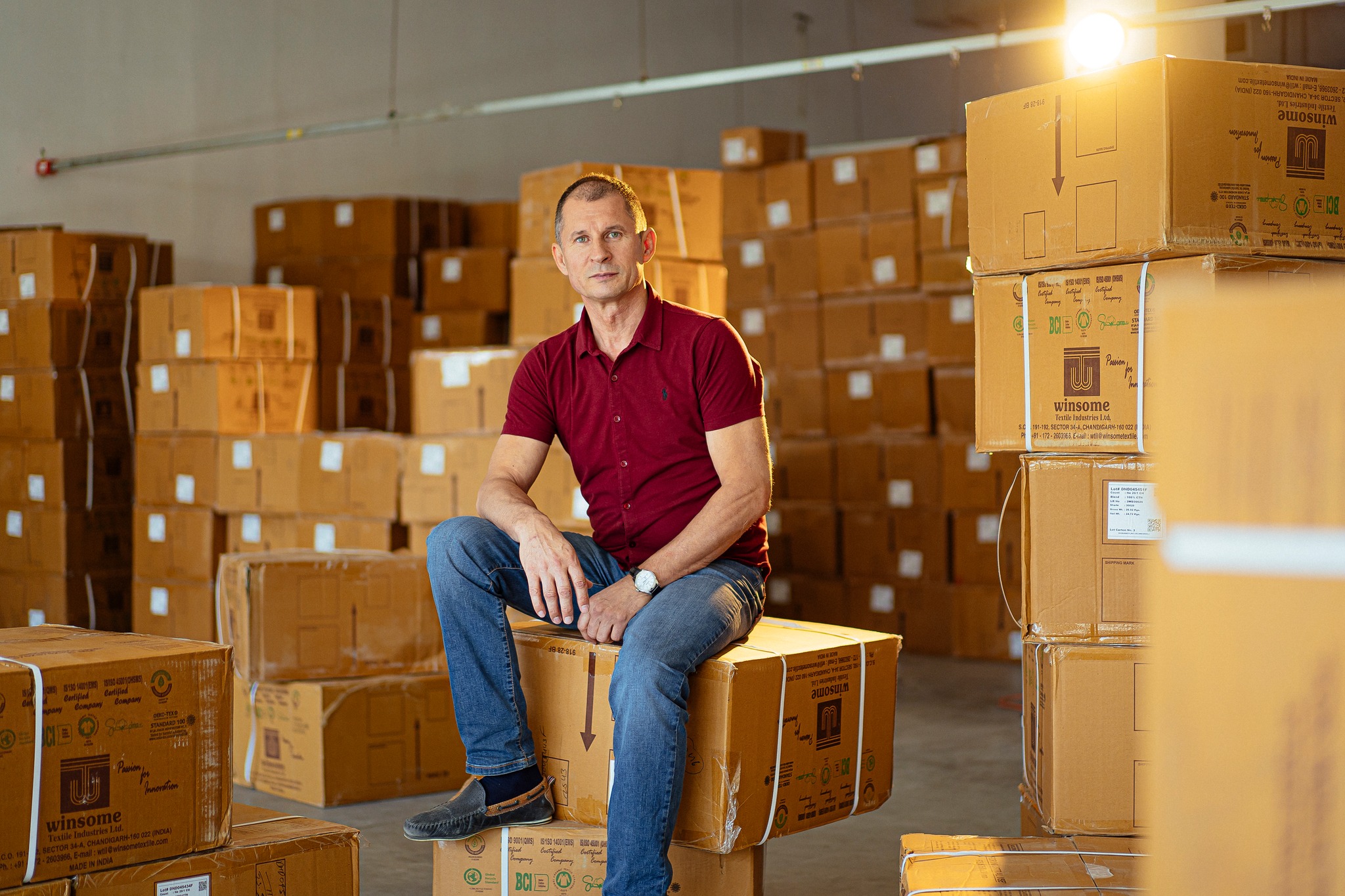
Rubizhne Hosiery Manufacturer (RHM) is preparing to resume its work in Lviv. The company lost all its equipment and stock of finished products when Russian troops destroyed the factory the Misiurenko brothers had been building for 20 years in Rubizhne, Luhansk Oblast.

USAID Economic Resilience Activity (ERA) paid for the manufacturer’s annual lease of 1,000 square meters of production premises in Lviv. Currently, the company is waiting for twenty knitting machines, purchased with funding from RHM’s partners Dodo Socks. RHM has already started accepting pre-orders from partners, and the team is discussing prints on men’s and women’s socks, and looking for high-quality raw materials.

“We are preparing our production premises, planning where to put the machines, and how to organize the process. Our socks are made of cotton, but synthetics are needed for prints on them, so we are looking for quality raw materials in Ukraine. Before the war, we had a wide range and stocks at our own production facilities. Now, in order to shorten the delivery time, we plan to buy them in Ukraine. As soon as the machines arrive, our partners from the Czech Republic are ready to place an order for socks. It will be a new product with a bright design, some kind of patriotic socks with Ukrainian symbols,” says RHM’s director Hennadii Misiurenko.

Small companies selling socks have begun to contact RHM, as they are also interested in cooperation with the company.

To support its employees, the company has begun to pay them wages. This is funded by selling part of the raw materials RHM bought in India a few days before the start of the war. but received in Lviv only months later, because the goods were delayed at the port.

Fifteen families of factory workers were evacuated from Rubizhne to Lviv. Recently, these people received free social housing in Mykolaiv dormitory, 40 km from Lviv. Now they are organizing their lives, and getting their children to school. The company will take employees to work by bus to Lviv, where the production facilities are located.

“Now we are carrying out the important work of presenting our company in Lviv, getting to know local business and looking for partners who are interested in cooperation with us. We need 30 workers to start up the 20 knitting machines we are waiting for. In addition to our own employees, we will invite local seamstresses and knitters to work,” says commercial director Olha Ushakova.

The company’s management believes that everything will work out in Lviv. But after Ukraine’s victory, they want to return to Ukrainian Rubizhne and rebuild their factory there.
FROM PASTILLE TO SOUPS FOR THE ARMED FORCES OF UKRAINE – ENTREPRENEURS FROM ZAPORIZHZHIA REORIENT BUSINESS DURING WARTIME

21 September 2022

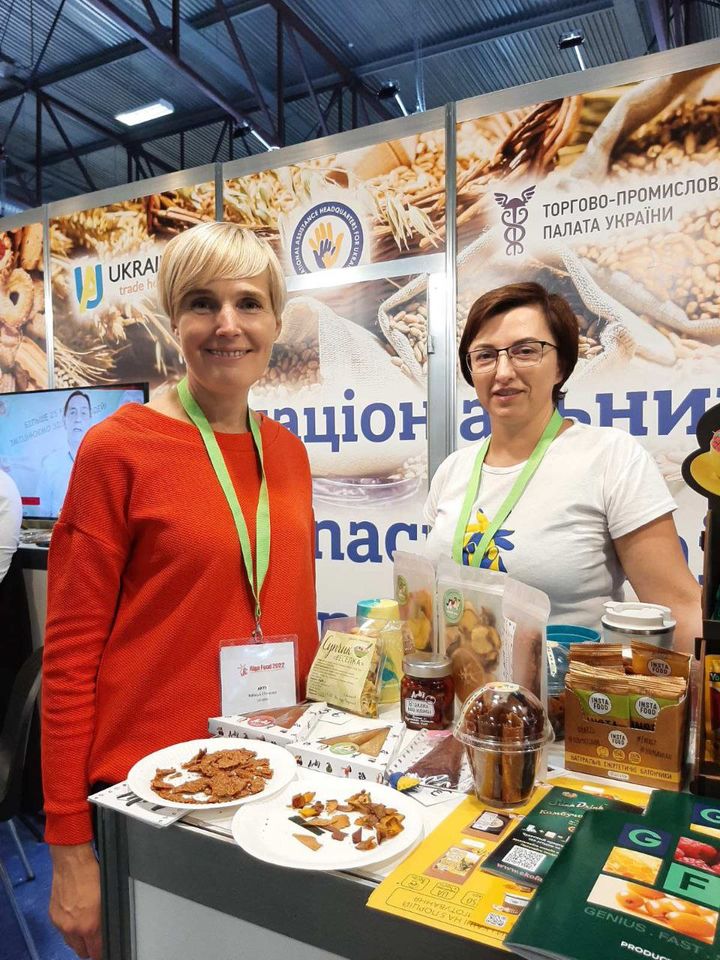
Hanna Dondyk and Nataliia Yefymenko from Zaporizhzhia have been successfully developing their own business for three years. They make pastille and fruit chips, crispbread and vegetable chips, and have been increasing their assortment and volume, creating new recipes for natural delicacies. They regularly took part in festivals held by USAID Economic Resilience Activity (ERA), gaining new partners and clients until everything changed on February 24.

Due to Russia’s full-scale invasion, the women were forced to change their main product. They did not work for the first few days of the war, but then they decided to help the Armed Forces of Ukraine while earning money to support the state economy and themselves.

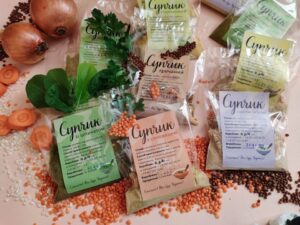
The women had developed 42 types of pastille from various fruits, but with the beginning of the war they realized that people would no longer be buying delicacies but only basic necessities. The business partners had to reorient production to something else. Now they make soups for the Armed Forces of Ukraine.

“Orders for pastille dropped to zero, and we needed a new product, so we started experimenting,” says Hanna Dondyk, Arty.ua co-founder. “We saw that there was no way for soldiers on the frontlines to cook, but they needed hot food that could be quickly prepared in the field. So we decided to prepare dry soups and borsch.”

Their equipment was suitable for this, as it was used to dry fruit and vegetables. Every day in their workshop, the women experimented with new flavors. Over a period of time, they created their own recipes for nine soups with rice, mushrooms, lentils, spinach, buckwheat and meat, as well as borsch. The soups just need hot water to be added, although some need to be cooked for 15 minutes.
“We mix boiled vegetables and dry them, then grind them, so we get a vegetable powder that just needs boiling water. Thus Arty.ua has created a new line of products according to the needs of the time,” says Dondyk. “From our assortment, we created a fully-fledged dry ration called “Victorious” for the Armed Forces. It includes soup, crackers, crispbread (cereal flakes), pastille and tea or coffee; it is in demand, and we have orders for such dry rations. Those who want to join the business can make a “suspended” dry ration: when a person pays for a ration but doesn’t take it, we send this ration to the frontline, to whoever the purchaser specifies or volunteers ask.”

Soups are sold through social media pages. The company is also willing to work with other farmers and volunteers. For example, bread can be brought to the women to be made into crackers. Or they arrange an exchange, whereby farmers bring vegetables and receive finished products in return.

“In the difficult times that have come to our country now, such flexibility in business helps us and our partners to survive. Therefore, we agree to such cooperation, in fact, to barter,” Dondyk says.

The entrepreneurs have considered what to do if the security situation in Zaporizhzhia worsens. “We discussed among ourselves whether we should leave, and what to do in case of increasing danger — where to transport the equipment, where to find premises. That’s how we developed plan B,” says Dondyk. “Plan A was to stay in place and work.”

Plan B has not been implemented yet, because the women’s team of six employees remains in Zaporizhzhia, working every day to produce delicious products.

This year raw materials supply is problematic. Fruit and vegetables that used to be brought from Kherson Oblast are unavailable due to the occupation, while produce grown in Zaporizhzhia Oblast has become more expensive, as it is not sufficient to meet demand. But even in such difficult times, entrepreneurs find new opportunities.

In September, representatives of Arty.ua took part in RigaFood 2022 international exhibition of craft producers in Riga, Latvia, which gathered about 400 manufacturers from Europe, Mexico and the USA. The entrepreneurs brought pastille, dry soups and borsch, which they sold to visitors of the event or offered to potential partners. Similar products (fruit pastille and dry soups) are available in Riga, but the entrepreneurs from Ukraine hope they will be able to find a niche for their delicious natural products. Now the women are negotiating with several European wholesale buyers, which will allow them to sell their products in stores in countries of the European Union.

The women also plan to open a craft store called Soloma in Zaporizhzhia, where they will sell their products to locals. There are already several such shops in the city where craftspeople sell their goods. Such cooperation is a profitable opportunity to present a wide range of different manufacturers and help each other in difficult times. The entrepreneurs also dream of creating an online store to present the delicious products of craft producers of Zaporizhzhia Oblast and other regions for purchase and delivery.

USAID ECONOMIC RESILIENCE ACTIVITY AND THE MINISTRY FOR COMMUNITIES AND TERRITORIES DEVELOPMENT OF UKRAINE SIGNED A MEMORANDUM OF UNDERSTANDING

20 September 2022

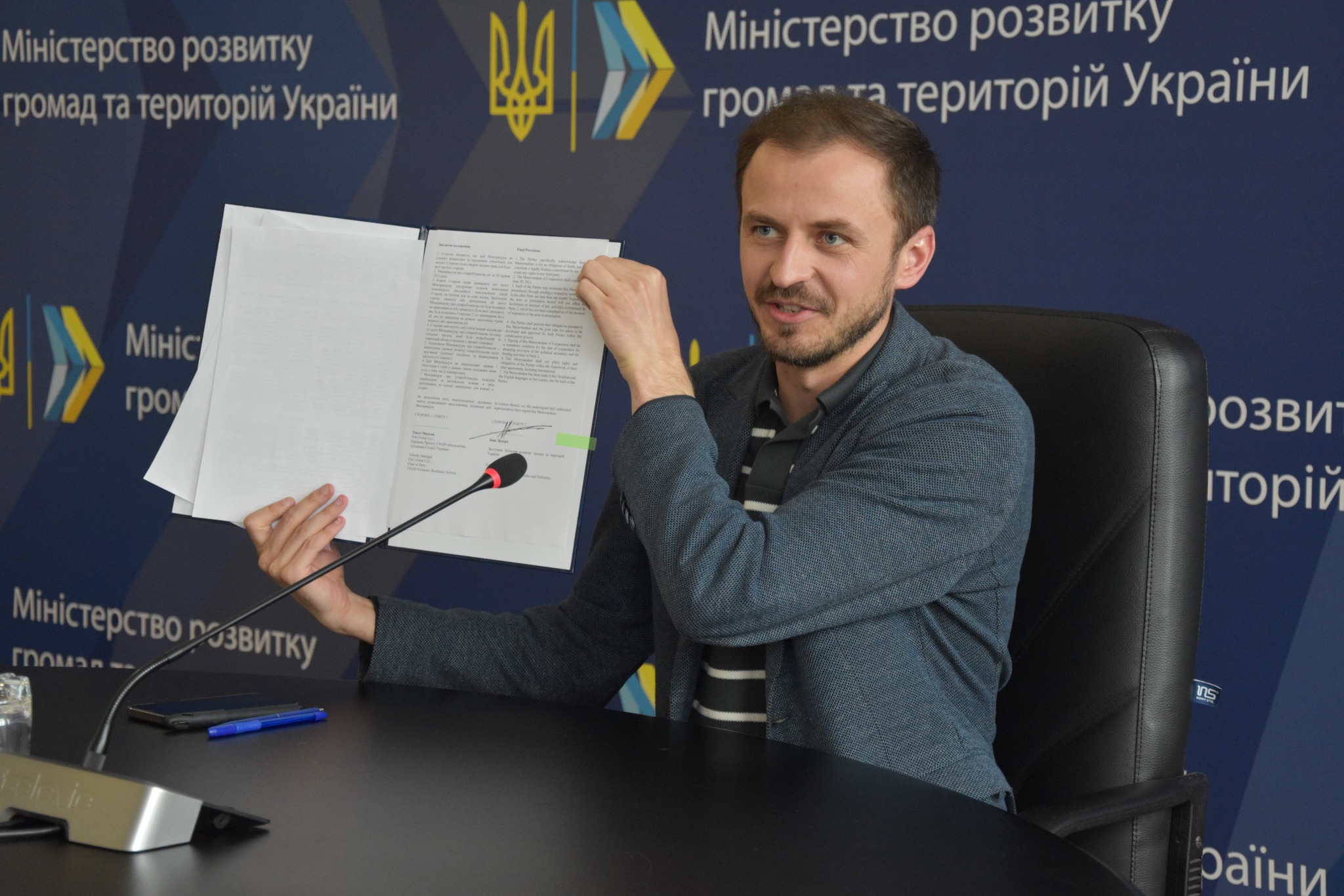
On September 16, USAID Economic Resilience Activity (ERA) and the Ministry for Communities and Territories Development of Ukraine signed a Memorandum of Understanding.

The agreement sets out key goals of cooperation, from implementing strategies and plans for the reconstruction of Ukraine to socio-economic recovery and infrastructure rehabilitation of regions and cities affected by Russia’s military aggression.

Ivan Lukeria, Deputy Minister for Communities and Territories Development, said that the experience of Economic Resilience Activity – a program which worked for several years in eastern Ukraine and has now expanded to cover the whole country – is very important and necessary for the reconstruction of infrastructure facilities.

“Your experience is essential for the recovery of Ukraine. That is why we initiated this memorandum aimed at rehabilitating the infrastructure destroyed due to Russia’s aggression. Many critical infrastructure facilities have been destroyed; now transport facilities, residential buildings, schools, kindergartens, and parks need to be restored. We believe that every destroyed building will be rebuilt, and Ukrainians will have a comfortable environment for life and work. We believe in our partnership and fruitful cooperation in many sectors,” said Ivan Lukeria.

ERA will provide technical support to the ministry in the reconstruction of communities, as well as contribute to attracting funding for the recovery of Ukraine.

“Through our cooperation with the Ministry for Communities and Territories Development, the experts of USAID Economic Resilience Activity will provide technical support in areas of cooperation aimed at the restoration of affected communities and territories and, if necessary, will help the ministry to attract additional funding and other resources for the implementation and development of joint activities. We expect that our joint efforts will be successful, and will result in effective revival of Ukrainian cities and communities and creation of a comfortable and modern environment for their citizens,” said Timothy Madigan, USAID Economic Resilience Activity Chief of Party.

Persons responsible on both sides for coordinating the joint work will be determined shortly. The memorandum will be valid until June 30, 2023.

MORE THAN 1100 UKRAINIANS RECEIVE GRANTS FOR BUSINESS DEVELOPMENT

19 September 2022

On September 13, the fifth online dialogue platform “Support for Businesses in Wartime: Relocation and Recovery” took place.

The event was held by USAID Economic Resilience Activity (ERA) in cooperation with the Reform team under the Ministry of Economy of Ukraine (MEU), and representatives of Oschadbank, the State Employment Center and businesses.

The event was attended by 90 representatives of small and medium-sized enterprises (SMEs), including relocated businesses that are now resuming work and are interested in attracting grants to create or scale up businesses.

About 11,000 Ukrainians submitted grant applications to start or restart businesses under the e-Robota state program, and 1,115 applications have already been supported by the government. The first grantees are already opening bank accounts; within six months, they should create jobs and hire people for 24 months.

“New grant applications are coming in from entrepreneurs every day on the Diia portal, and as of today, we have already received almost 11,000. All in all, the winners of different grant programs have requested more than 700 million hryvnias. The government has allocated 40 billion hryvnias for this project, so we urge businessmen and everyone who dreams of starting their own business to apply for state grant support. We strive to do our best to ensure every working Ukrainian has all the conditions to become a fighter on the economic front and thus bring our country closer to victory over the enemy,” said Tetiana Berezhna, Deputy Minister of Economy of Ukraine.

Currently, the government is waiting for the Verkhovna Rada to pass a draft law on reimbursing the single social contribution paid by those entrepreneurs who employ youth, veterans and other vulnerable categories.

To make it easier for business, the State Employment Center posted documents and tips on how to get a micro-grant on its website, as well as announcements of events where people can get help with filling out application forms and avoiding common mistakes – for example, specialists advise filling out an application in Diia on behalf of a legal entity, not an individual.

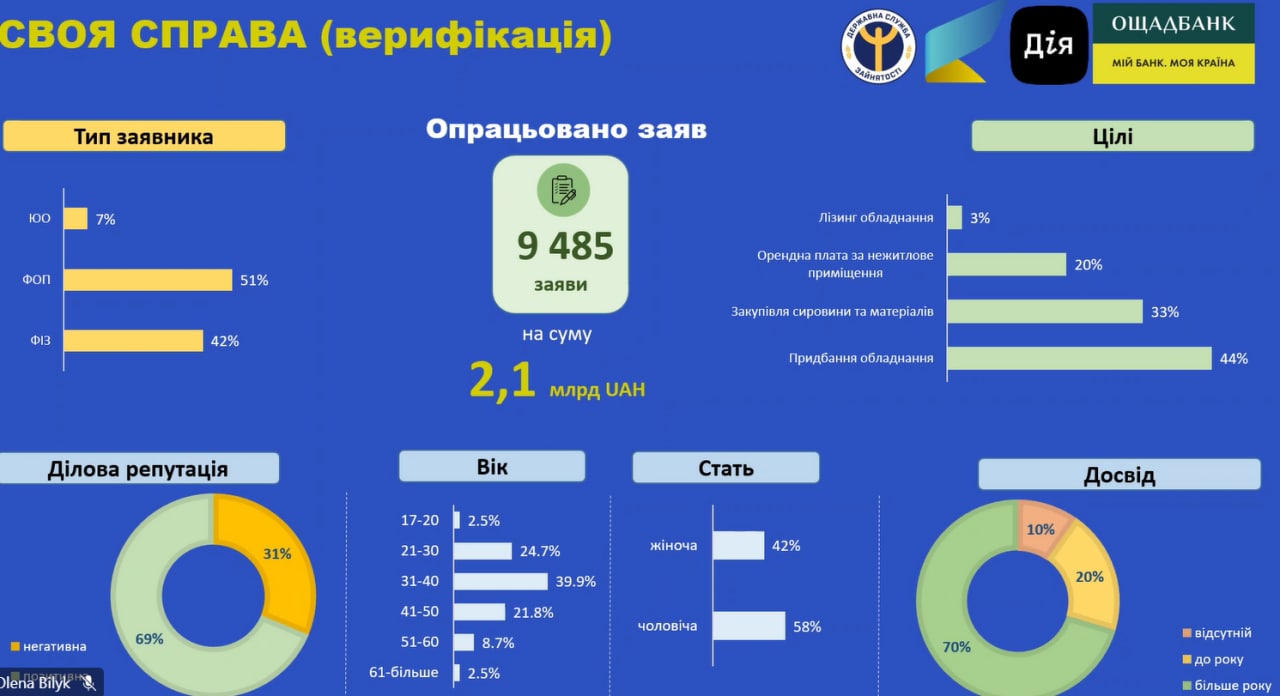
“Among the common mistakes is an incorrectly specified grant objective, when sometimes the applicant writes about one thing and applies for something else. There are certain restrictions on the use of grant money, for example, no more than 25% of the grant can be used for rental fees. But the main thing is that we receive interesting ideas and see people’s desire to develop businesses,” said Tamara Sokhatska, Deputy Director of the State Employment Center.

“It’s good that people are actively applying to start or resume businesses, because a strong economy is key to our success. We support only those applicants with a good business reputation. We see that there is gender equality among the applicants, and the average age is from 30 to 40 years old. We do not take experience into account, the main thing is desire. The most active regions that apply for grants are Vinnytsia, Poltava, Sumy, Kharkiv and Chernihiv Oblasts,” said Olena Hil, Deputy Director of the Department of Micro, Small and Medium-sized Business at JSC Oschadbank.

The most common reason for refusing applicants is court cases (criminal; the applicant is a defendant or party to the case), followed by negative credit history and invalid passports (expired unpasted photos; misspellings of surnames in the grant application and passport). The bank refuses to provide a grant to applicants with a negative business reputation. This reputation includes one or more components: invalid passport, seizure of property, and unpaid taxes.

During the event, participants asked how they could find out the reasons for refusals, and about the possibility of submitting grant applications from de-occupied territories. If applicants want to know the assessments of their grant applications, they should contact the hotline of the State Employment Center. The bank or employment center cannot disclose confidential information to a third party.

Speakers also advised entrepreneurs to use open registers, and try to make an entry for themselves. The same information will also be used by bank representatives when evaluating the application. Having a debt on loan payments for 180 days reduces assessment points of a business plan. Official registration as an individual entrepreneur is mandatory at the time of receiving the grant.

Iryna Fishchuk, an entrepreneur from Ivano-Frankivsk, shared her experience of
receiving a grant. She submitted an application three times, each time
correcting errors in it, before being successful.

Next month, USAID Economic Resilience Activity plans to hold another dialogue platform for entrepreneurs, inviting speakers who will be able to answer common business questions. In particular, entrepreneurs asked to discuss the issue of grants taxation.

ENTREPRENEUR FROM KRAMATORSK RESUMES BUSINESS IN DNIPRO

16 September 2022

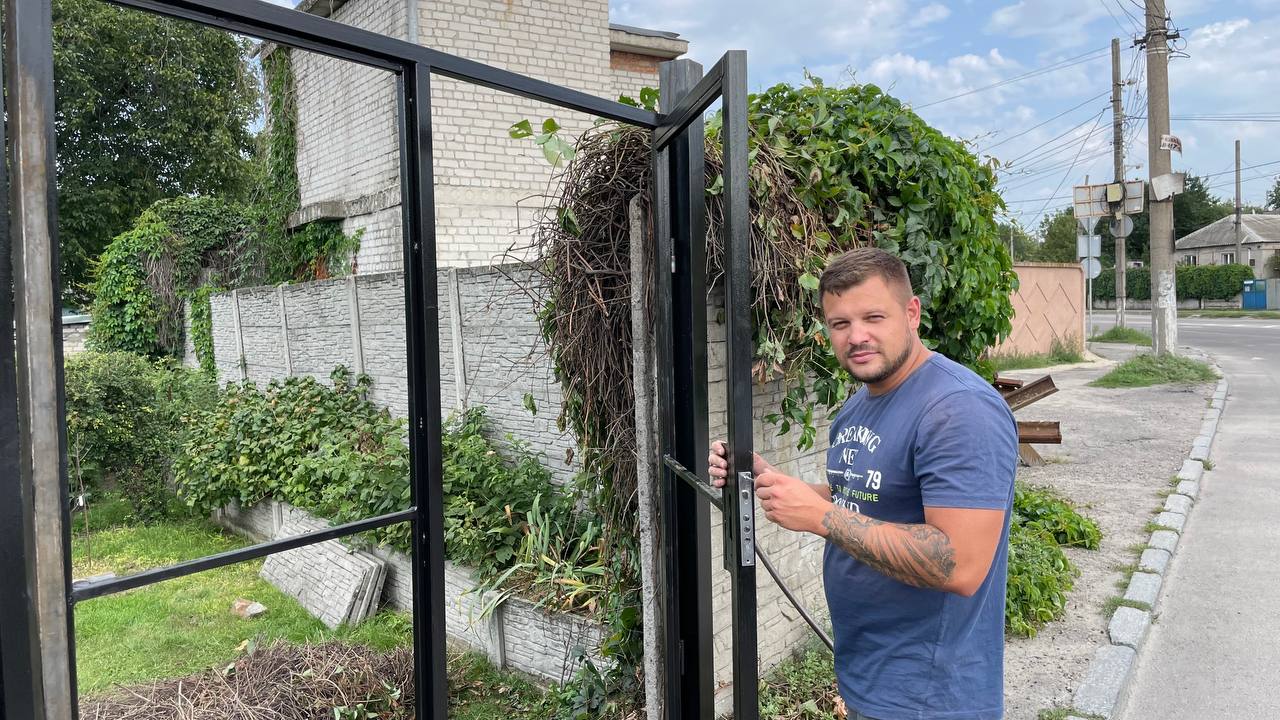
Kostiantyn Kuznetsov has been making various metal products for ten years. He started with barbecues and forged items (railings, stepladders, grates), and now produces fencing. Due to hostilities, he had to leave his native Kramatorsk and move to Dnipro.

A few days before the war started in February, Kuznetsov rented an office in Kramatorsk, bought metal, and was about to start producing metal fences from corrugated sheets. He was planning to scale up his business to several regions, but then war broke out.

“People were not ready to install gates; instead we had to save lives and property. For several months, I volunteered in Kramatorsk, helping locals to evacuate,” he says. “In April, I rented a car and took the metal, my tools, welding tables and racks to Dnipro. Even then, I still did not think about resuming work, but I realized I had to relocate equipment which would help me to earn money in the future.”

Kuznetsov did not really believe that people would order fences during wartime. But later, in Dnipro the entrepreneur rented a space for production in an industrial workshop and learned about ERA’s consultation program on the resumption of small business. An ERA consultant assisted Kuznetsov in setting up targeted ads and helped promote his services through a website. Later the entrepreneur received his first orders, and the number of customers soon increased from two to twelve a month.

Kuznetsov was known at home, receiving orders from various towns in the north of Donetsk Oblast. Now these customers have either left or have no money and remain in dangerous areas. The entrepreneur now fulfils orders for Dnipro residents, learning a new market.

In addition to gates, Kuznetsov also has an idea to make potbelly stoves.

“Without gas supply, these stoves can help people in the east to survive the winter and heat their homes. I will start their production soon. I already have a drawing of such energy-efficient stoves, and I want to make them affordable in price and size so that people can buy them. With an average price of around 6000 hryvnias, I plan to make them for 4000 hryvnias each. I think they will be in demand,” he says.

Kuznetsov hopes to return to his native Ukrainian Kramatorsk. And he believes there will be a lot of work for him there, including restoring fences and other objects.

UKRAINIAN BEEKEEPERS JOIN 183 COUNTRIES TAKING PART IN INTERNATIONAL APICULTURAL CONGRESS

25 August 2022

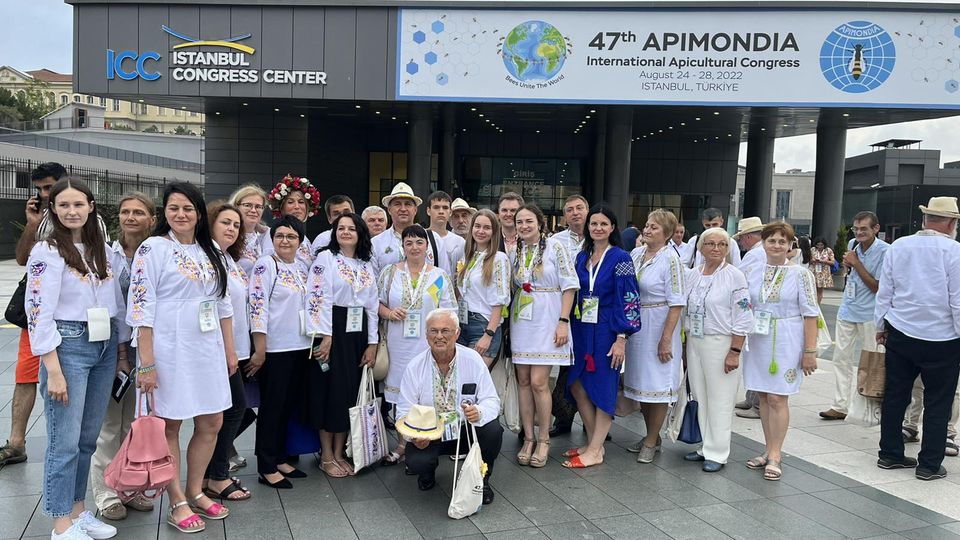
Apimondia – the biggest international apicultural congress in the world – was held in Istanbul on August 24–28. The Ukrainian delegation included beekeepers from different regions of Ukraine, honey exporters, scientists, and producers of beehives and honey-based beverages.

Economic Resilience Activity (ERA), in cooperation with the Union of Beekeepers of Ukraine and the Ministry of Agrarian Policy and Food of Ukraine, supported the participation of 33 Ukrainian honey producers in the 47th congress, Apimondia-2022.

“After such events in previous years, we got new contracts, connections, and experience. After participation in Apimondia in 2020, export sales of honey increased by 20 percent. Ukraine is interesting to the world, in particular, as a producer and exporter of honey,” said Andrii Bazhyn, Vice-President of the Union of Beekeepers of Ukraine.

On August 24 – Ukraine’s Independence Day and the first day of the event – the Ukrainian delegation began by singing the national anthem, and presented bread with words of gratitude to representatives of the countries providing military aid to Ukraine.

During the congress, a video featuring Ukrainian beekeepers pumping honey during the war, as well as apiaries destroyed by Russian shelling, was shown. At the exhibition stand, visitors could taste products from Ukraine, and see beehives and various equipment beekeepers use today, as well as engage in business negotiations.

More younger people are becoming beekeepers, and accordingly, more innovations have been brought to the field.

“We need technologies in apiaries which Ukrainian beekeepers lack. Here you can borrow experience from France, Germany, Great Britain, and the USA. Product quality control is through laboratory research. Britain, Germany, and the USA are leaders in this field,” said Volodymyr Postoenko, Director of the Prokopovych Institute of Beekeeping National Research Center.

Roman Voitkiv, director of Ukrainski Medovyky LLC, participated in Apimondia for the second time. This year, he submitted 10 different beverages of his own

production to the competition. This way, he promoted and raised awareness of his own brand. Beverages were also presented at the Ukrainian stand.