PIXELS INSTEAD OF CHILDREN’S PRINTS – ENTREPRENEUR FROM LYSYCHANSK RESUMES BUSINESS IN DNIPRO

25 July 2022

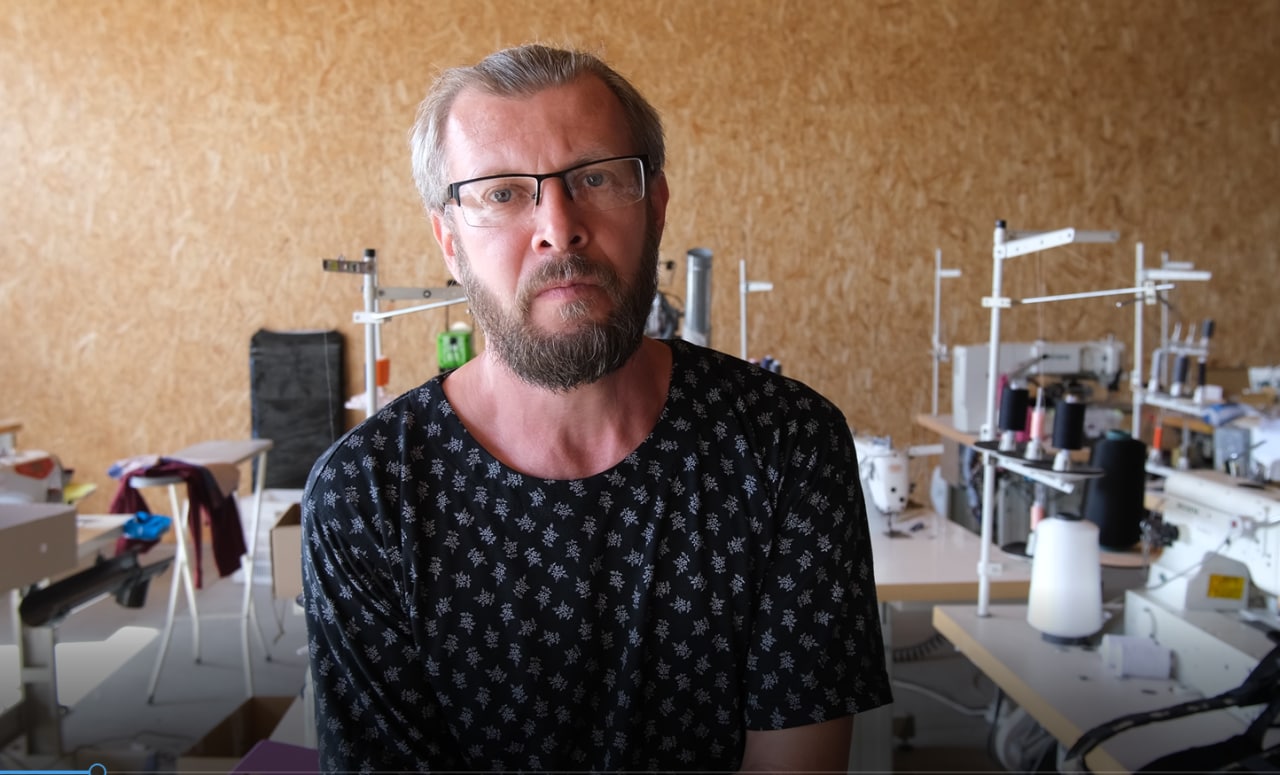
In April, Dmytro Kosilkyn left his hometown of Lysychansk in Luhansk Oblast, where since 2015 he had been developing a sewing business and had a large workshop with modern equipment.

For two months after the beginning of Russia’s full-scale invasion of Ukraine, he volunteered to deliver humanitarian goods to local residents.

Finally, friends persuaded him to relocate his sewing equipment to Dnipro. At the time, it was difficult and expensive to transport large goods out of Lysychansk, because of ongoing fighting in the city. There were no more trucks in town to take the equipment out of the workshop, so Kosilkyn and his friends transported what they could lift themselves. The expensive automatic pockets machine and laser plotter remained in Luhansk Oblast.

“I asked some men to help me load the equipment. We took what we could lift – sewing machines and automatic equipment; a stapler, contour sewing machine and gluing machine. We also took some of the finished products – winter and spring collections of children’s overalls. We took everything we needed for a quick start,” says Kosilkyn.
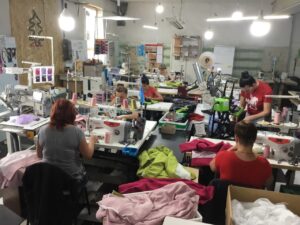
In Dnipro, Kosilkyn’s friends helped him to rent a production facility where he installed the equipment. Two female employees moved to Dnipro to work with him, and two more female IDPs are now learning to sew. It is a big reduction from the 10 workers in the workshop before the war, and the products have also changed dramatically. Before the war, the company produced children’s waterproof overalls; now they make clothes for the military.

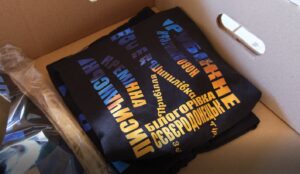
In May, they started sewing patriotic T-shirts and the most necessary items for the military: plate carriers, belt-shoulder systems and different pouches. Following the advice of soldiers who came to the workshop and showed them what was comfortable, they made high-quality products.

Later, Kosilkyn found his niche and began using the membrane fabric which he had previously used for waterproof children’s clothing.

“In the winter, we ordered white membrane fabric, agreed with our partners about printing on it, and made test samples for children’s overalls. But then the war broke out. Children’s color prints were replaced by pixel, and we started sewing ponchos – rain covers for the military. The first samples were not successful; the sleeves were too short, and water leaked from them onto the wearer’s clothes. We improved that, and now our ponchos are the most comfortable and effective means of protection in the rain,” says Kosilkyn.

The Lysychansk producers posted information about their products on social networks and began promotion. Military units began to contact them and order raincoats, both wholesale and retail.

To gain working capital to pay off loans, the entrepreneur is holding a sale of already-made children’s clothing at significant discounts. You can buy them at this link:

While Kosilkyn and his employees make products for soldiers, they want to sew for children again, to produce family-friendly, bright collections of warm clothing.

The businessman does not plan to return home, because he always dreamed of moving to a big city. In the future, he plans to develop his business in Dnipro.
RUBIZHNE HOSIERY MANUFACTURER TO PRODUCE SOCKS IN LVIV

25 July 2022

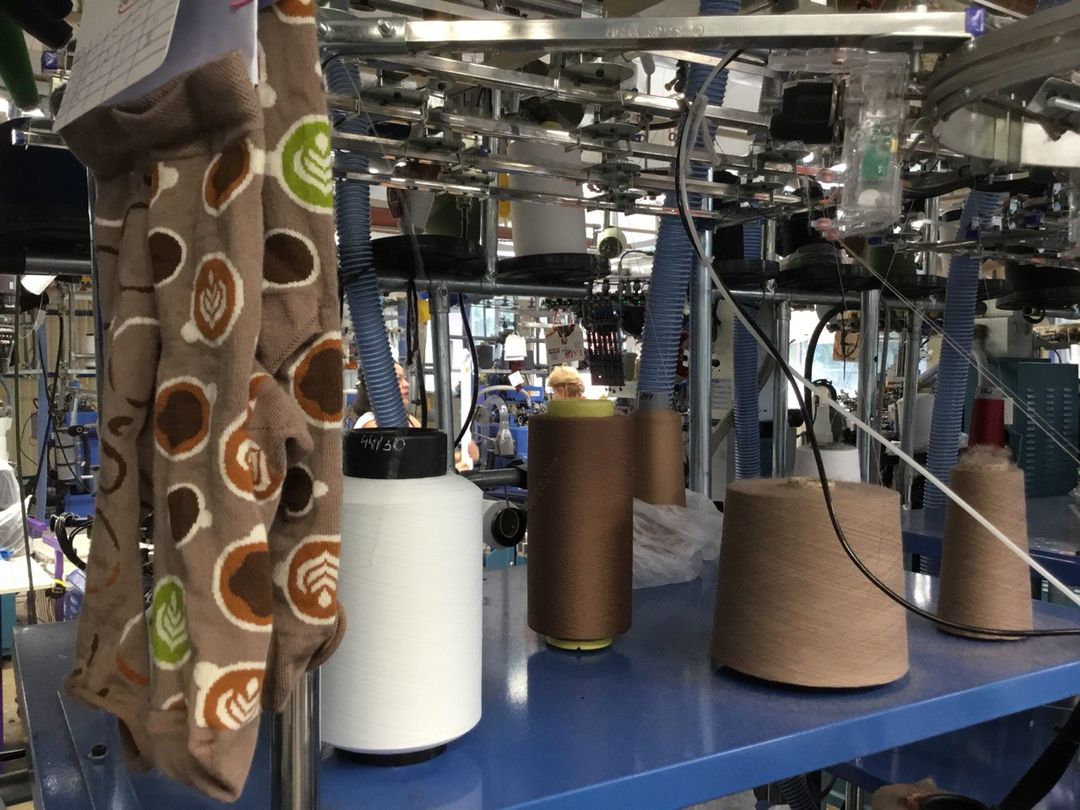
Economic Resilience Activity (ERA) will cover the annual rent of production premises for Rubizhe Hosiery Manufacturer (RHM) in Lviv. The premises of 1,000 square meters fully meets the technical requirements for production of light industry products.

Now the company is waiting for knitting machines from Chinese manufacturers, purchased with a loan from Dodo Socks, RHM’s partner since 2017.

“Dodo Socks gave us money to purchase 20 machines that will allow us to start producing socks. There are already several Ukrainian companies ready to order branded socks from us with their own design,” says RHM Director Hennadii Misiurenko.

The raw material for production is already in a rented warehouse in Lviv. Three containers of high-quality cotton from India were ordered before the war and arrived in Ukraine a few months later. The first batch of new products is planned to be produced in September.

The factory will start the production process with thirty of its employees. Later the firm plans to hire new people who will be trained on the new equipment.

“There is very strong competition in the socks market. On the new equipment, we will manufacture socks to order for brand companies in Ukraine. The first batch of products will be for Dodo Socks. We appreciate their support and are ready for further cooperation,” says Misiurenko.

Comparing the experience of starting a business more than 20 years ago with the current situation, Misiurenko thinks that now is more difficult, because of having to leave his home and relocate due to the war.

“We started our business in the 2000s. We took the first steps, we bought equipment as we only had three knitting machines, but at least we were at home. Now we are far from home, and again there are no machines, but we have experience, and I hope that will help us to start again in new conditions,” says Misiurenko.

RHM expects a grant from ERA for the purchase of 11 Italian machines for their production. As delivery may take a few months, the factory plans to train new employees by that time.

In March 2022, Russian troops shelled RHM’s modern production facility in Rubizhne, and the warehouse of finished products was looted. Previously the company produced up to 2 million pairs of socks annually. In 2021 the firm started selling products to the Netherlands, Spain and the Czech Republic.

BDZHOLOVIZ TRAILERS FROM CHERKASY OBLAST GO TO CUSTOMERS ALL OVER UKRAINE

18 July 2022

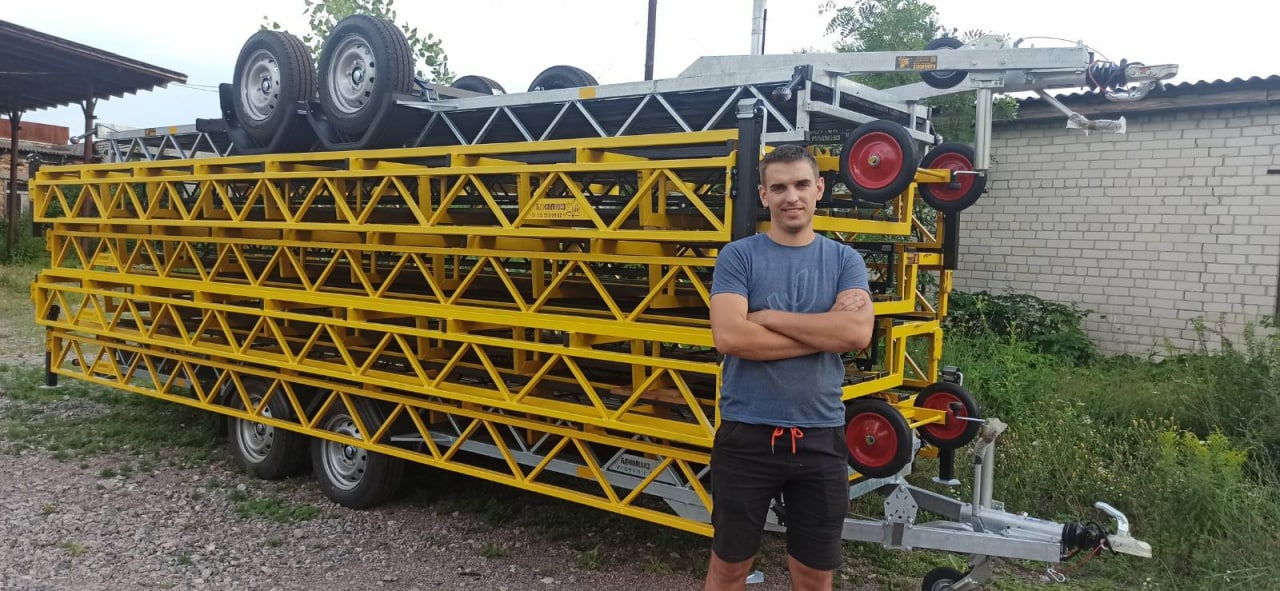
Before the war, entrepreneur Andrii Kaidash had his own workshop in Vasylivka, Zaporizhzhia Oblast, where he manufactured trailers for transporting beehives called Bdzholoviz — also the name of his company. Kaidash had orders from beekeepers for several months in advance, and his workshop hummed with daily activity.

At the beginning of Russia’s full-scale invasion of Ukraine, production stopped. Vasylivka was occupied on the second day of the war.

“It was too risky to continue working. My family hid in the basement for several months. Fighting began immediately in the city. We had no water, and the electricity was periodically cut off due to hostilities,” says Kaidash of the first days of the war.

Armed Russian occupiers came to his workshop, which contained machinery and tools for metalworking.

“Several times I told the people who came that it was not my property, I didn’t have the keys and couldn’t help. But one day they broke the locks and went inside. When I came there later, I saw that they were repairing something on the machines, although nothing was stolen, all the tools were still on site,” he recalls.

At the end of April, Kaidash and his family decided to escape the occupation. They had to drive through several enemy checkpoints, and the chances that machinery or tools would be taken away was very high, so he took only one welding machine with him.

“I had six such machines in my workshop, but I decided to take one, so that even if they took it away, I wouldn’t feel so sorry,” he says.

That welding machine, as well as the large trailer he used to transport equipment for his production, were let through the checkpoints. At the time there were so-called “green corridors” through which people could go from occupied areas to Ukrainian-held territory. The family went to Zaporizhzhia, the nearest Ukrainian city, 50 kilometers from Vasylivka.

Before the war, the entrepreneur had received many pre-paid orders for production of Bdzholoviz trailers.

“I felt a great responsibility for those unfulfilled orders, so I had to start working again,” he says. “It was unrealistic under occupation, I just had to move to free Ukrainian territory.”

Since trailer frames need to be galvanized, and the relevant enterprise is located in Cherkasy, Kaidash decided to leave Zaporizhzhia and set up his workshop in Cherkasy region, where he found local support.

“While looking for production premises we met a wonderful person, local successful entrepreneur Oleksandr Korol, who offered us his house to live in. He also helped with contacts of a leaser for production premises. I am very grateful that during the war there are people who are ready to help,” says Kaidash.

Kaidash rented industrial premises in the village of Svydivok, Cherkasy Oblast, bought production machines and welding equipment, and hired his relatives to work.

The trailer manufacturing process takes longer now that there is not enough equipment, workers, or working capital. But Kaidash has not lost his optimism and continues to fulfill orders. Several trailers have already been manufactured in the new workshop for customers from Cherkasy, Kharkiv, Kyiv, Lviv and Sumy regions.

“When we made the first trailers in the new location, I breathed a sigh of relief. I had finally begun to give customers the orders they had been waiting for for months. That was a pleasant feeling, although no one reproached me for the missed deadlines,” he says.

The entrepreneur does not know whether he will be able to return home, so for now he is working in a new place, providing jobs for his relatives and dreaming of the victory of Ukraine.

ENTREPRENEUR FROM KRAMATORSK RUNS THE LARGEST PRIVATE KINDERGARTEN IN KOLOMYIA

12 July 2022

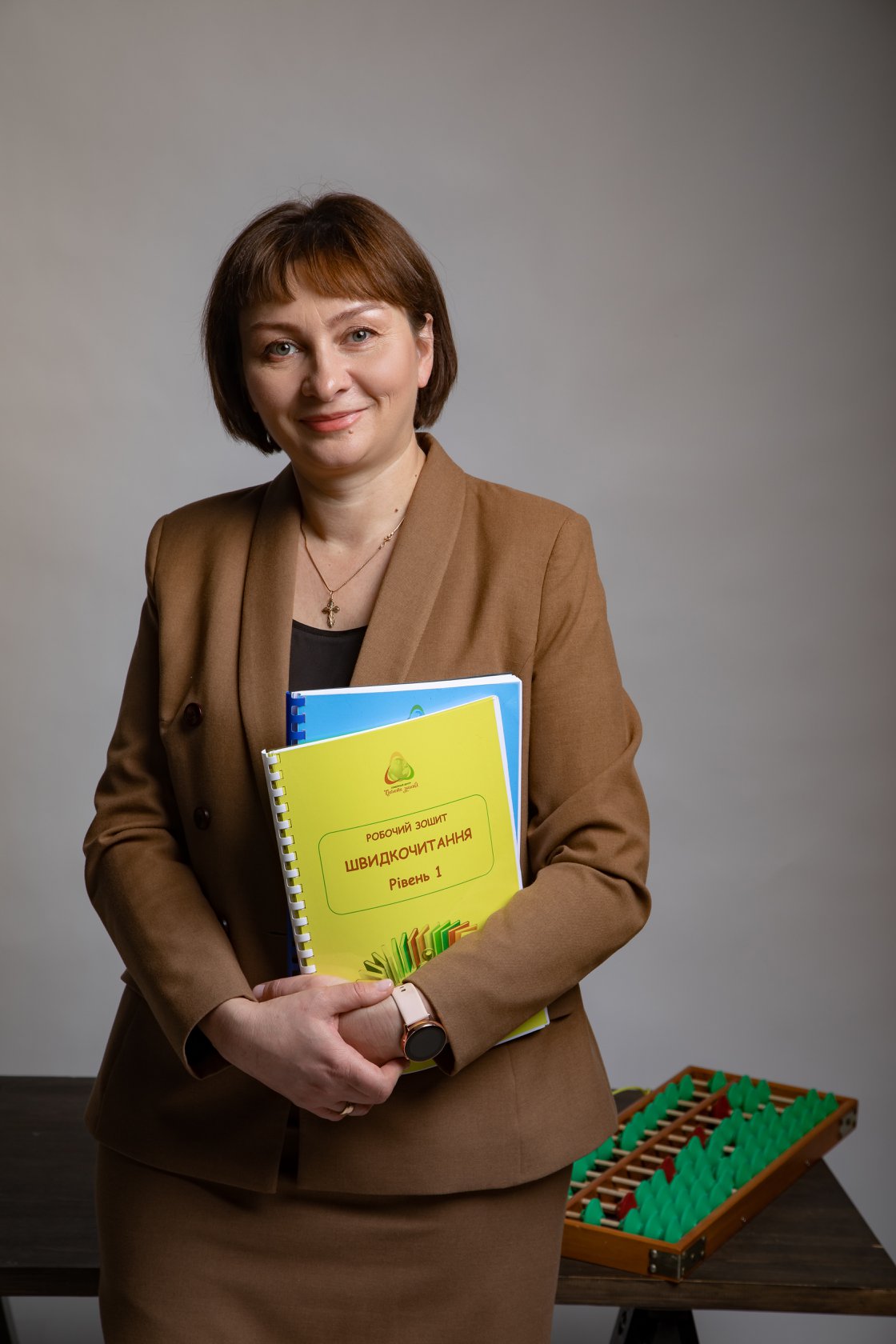
Hanna Oshchepkova started a network of children’s centers in Kramatorsk in 2014. She and her colleague Iryna Moskalets came up with this business idea because they wanted to give their own children an opportunity to develop. Over eight years, the partners opened four Planeta Znan (Planet of Knowledge) centers in the city, offering 26 original courses on early development, preparation for school, speed reading, development of logical thinking, mental arithmetic, and other topics. More than 500 children attended classes during the year.

Hanna Oshchepkova has repeatedly participated in trainings for representatives of small businesses and Business Breakfasts organized by Economic Resilience Activity (ERA). Thanks to the new contacts (networking) with regional entrepreneurs, and expertise in marketing and photography, Anna successfully developed her business.

At the end of last year, the entrepreneur opened a small private kindergarten. She planned to open a large kindergarten in February 2022, and had purchased furniture and educational equipment. The war changed these plans.

“During the two months of operation of our first kindergarten, we saw that there is a demand for these services – people brought their children to us even though there were places in municipal institutions. That inspired our further development. Our small kindergarten was based in our educational center, which was inconvenient as the children needed a playground. So we decided to expand. We rented a large private house so we had our own playground, got all the permits, bought furniture and were preparing to open a kindergarten for 60 children,” says Oshchepkova.

A few months later Oshchepkova opened the kindergarten – but in Ivano-Frankivsk Oblast.

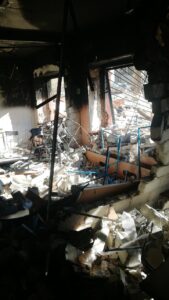
On February 24, all her plans for business development changed. Classes were stopped, and people began to leave Kramatorsk when Russia invaded Ukraine. It became too risky to work with children. In March, one of Oshchepkova’s largest centers in Kramatorsk was completely destroyed by shelling by Russian troops. After that, all furniture and workbooks were moved from the centers to a safer location.
The situation in the east continued to worsen every day, but even after the center was hit by shelling, Oshchepkova did not consider leaving. Her whole family worked as volunteers when the business closed, and they refused to leave their home until April, when mass evacuation from Donetsk region was announced.

In May, at the invitation of a colleague, Oshchepkova went to Kolomyia. Since her business stopped on February 24, she had had no income, so after two weeks in Kolomyia she began exploring options for continuing entrepreneurial work by opening the kindergarten she had planned to open at home.

She took the train back to Kramatorsk to collect the kindergarten equipment, although she had no idea how to transport it 1100 kilometers.

“Transporting everything by truck across Ukraine was very expensive, and our family couldn’t afford it. On the train, I remembered the state program for business relocation and filled out an application. Literally in an hour, I got a call from Ivano-Frankivsk Oblast Military Administration and they offered a state railway wagon to take all our equipment. This surprised me, because we were planning to relocate not a factory, but a kindergarten and equipment, but it gave us the strength to move on,” says Oshchepkova.

The family rented a five-ton truck in Kramatorsk and took everything they could fit in it. In Pokrovsk, everything was reloaded into a railway wagon to Kolomyia. In addition to the furniture purchased for the kindergarten, the family also took their own machines and tools which they used to make educational materials for their development centers and kindergarten.

“Everything worked out quickly, and as we wanted. We were looking for opportunities, and so they appeared,” says Oshchepkova. “I want to tell people, especially businesses from the east who are still hesitating about what to do, where to go, and whether it is worth moving or not: I think it’s worth it in order to develop, support your family, give work to others, pay taxes and bring our victory closer.”

While they were waiting for their equipment in Ivano-Frankivsk Oblast, Oshchepkova started an advertising campaign on social networks to recruit children for the kindergarten. Within two weeks, she rented premises in Kolomyia, installed equipment and opened for the first pupils.
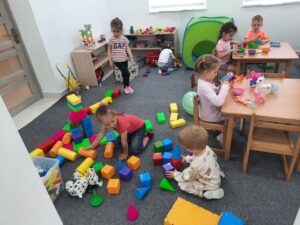
Now it is the largest private kindergarten in the city, attended by 20 children. By autumn, the entrepreneur plans to double the number by recruiting new groups. In addition to developmental classes, the kindergarten teaches logic and memory skills according to the Japanese system.

Hanna Oshchepkova plans to return home, but by then she will already have a branch of her business in Prykarpattia, so she considers this relocation as scaling up her favorite business.

FROM COFFEE BEANS TO WHEAT AND COAL – ENTERPRISE FROM KREMINNA MANUFACTURES SEPARATORS FOR AGRIBUSINESS

07 July 2022

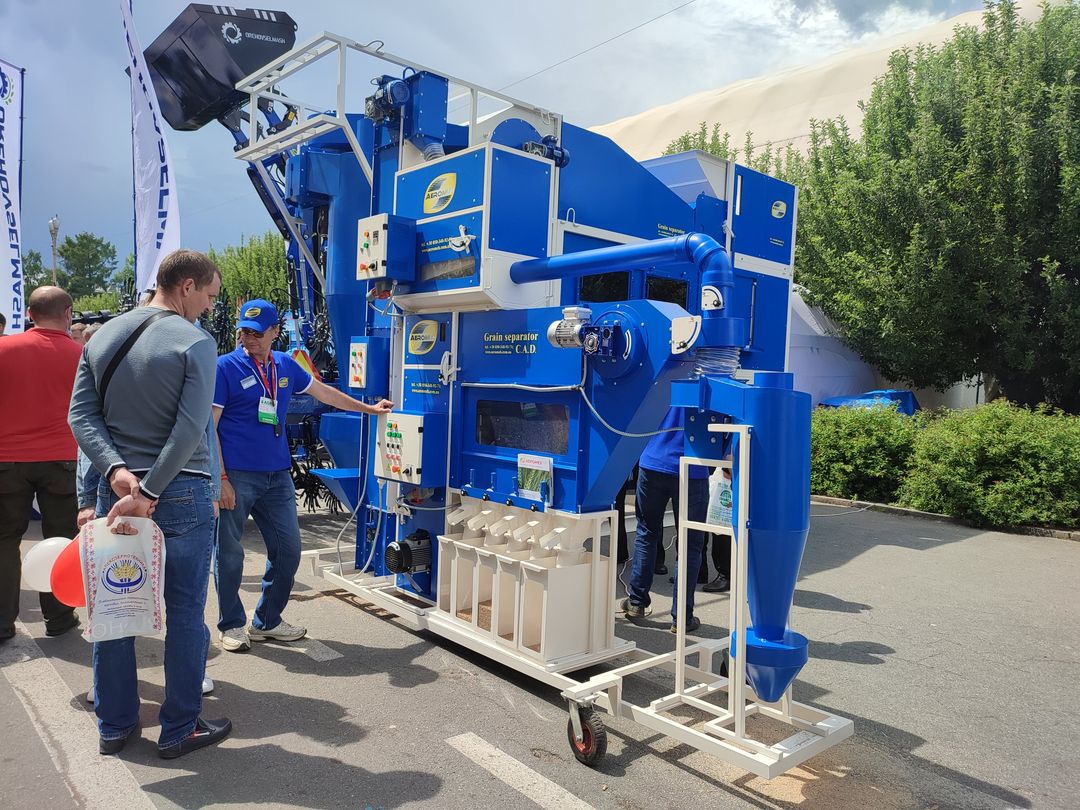
Aeromeh, a research and production enterprise from Kreminna (Luhansk Oblast) moved to the village of Yerky in Cherkasy Oblast. Founded in 2001 in Luhansk, this was the second relocation for the company. In the new location, the company’s specialists began manufacturing their main product: the SAD separator (aerodynamic separator) for grain cleaning.

These machines are designed for preparation of seed material, providing high-quality sorting of seeds. This is a patented technology of the Luhansk manufacturers. The company has customers all over the world, in Africa, Canada, Europe and the USA. Before Russia’s full-scale invasion of Ukraine, 60% of all products were sold for export, and 40% on the Ukrainian market.

Economic Resilience Activity (ERA) helps Aeromeh to enhance automation of business processes and launch a CRM system (Customer Relationship Management) for customers and sales management, build a new organizational structure, and define individual development plans for employees. Systematic work on entering the North American market is also ongoing.

In March, when Russian troops began intensive shelling of Kreminna, the company’s management decided to leave. The only things they were able to evacuate were some finished products from the warehouses. All the machinery for production remained in Kreminna: a laser machine, metal-working machines, auxiliary tools, lathes, welding machines and electric tools.

“This is the second evacuation for our company; we had the experience of relocating in 2014, when the war began in the east of Ukraine. We left Luhansk at that time, gradually evacuating our property as we had the opportunity to go several times. This time everything is different,” says Oleksandr Chornobai, Director and co-founder of Aeromeh.

The company did not manage to obtain state aid for business relocation. According to the director, each entrepreneur had to search for transport on his own, and then apply for reimbursement through an online platform. In April, the price for transportation from Luhansk increased almost tenfold, and it was very risky to pack up machinery under shelling.

“Before the war, renting a truck from Kreminna to Dnipro cost 10,000 hryvnias. In April the price reached 80,000 hryvnias, and drivers refused to go to dangerous regions,” says Chornobai. “It is impossible to remove heavy equipment quickly – for example, one of our machines took three days to install, and it was impossible to quickly disassemble it under shelling to remove it. So we transported only what we could on our own, primarily our finished products. That was important, because we were able to quickly ship them to customers and get funds for current expenses.”

For Aeromeh employees who moved from a city to the small village of Yerky, it was difficult to find housing, and many refused to move to an unknown region. Most of the private houses in the village were occupied, or empty and unfit for habitation. The company rented production premises on the territory of a former agricultural enterprise and began to work.

“There are fourteen people with us now. Each of them is very important in the production chain. Thanks to these people we started production at a new place. We perform part of the work in cooperation with our colleagues from Cherkasy, some by ourselves, and we also buy some ready-made parts. We have already purchased a small manual machine for metal processing and this week we are finishing painting several separators that were made in Yerky. Despite the war, we have plans for development; we are moving little by little,” says Chornobai.

COMPANY FROM KRAMATORSK FULFILLS ORDERS FOR AUSTRIA DURING THE WAR

05 July 2022

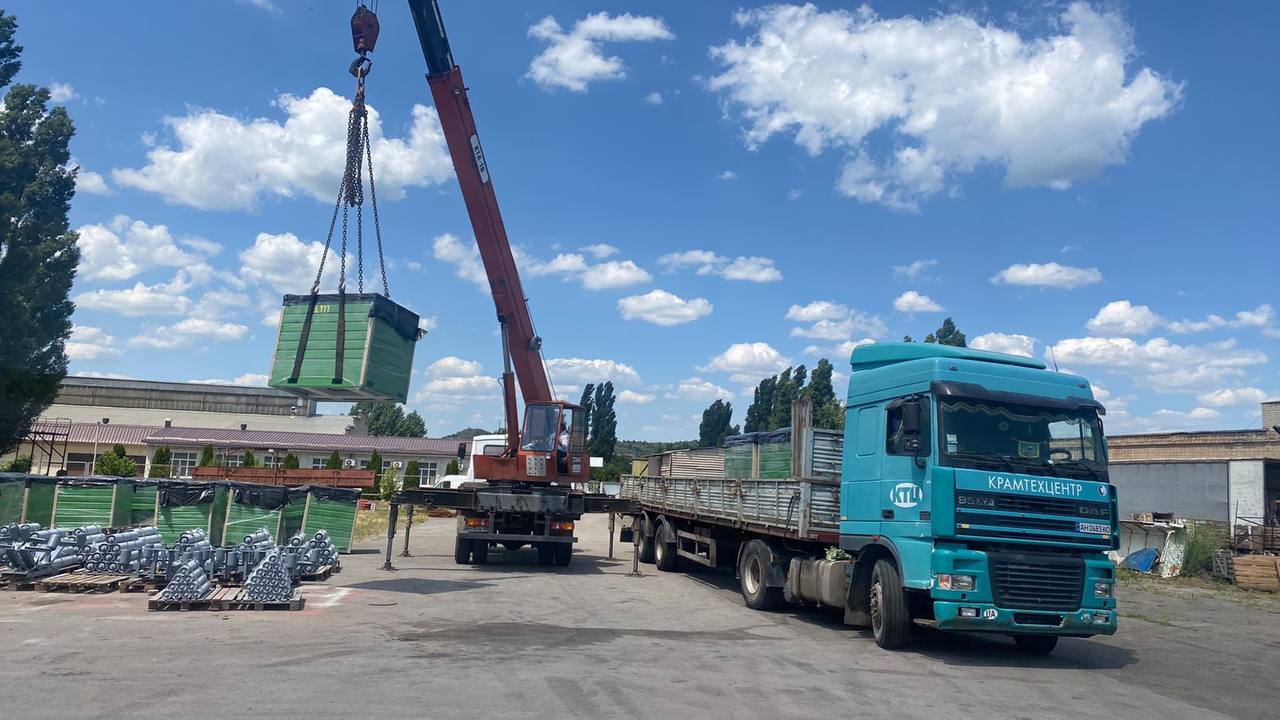
Kramtechcenter, a machine-building enterprise from Kramatorsk (Donetsk Oblast), moved to Dnipro due to hostilities, but despite all the difficulties it has shipped orders for Austrian partners.

The company produced grain storage containers for the customer. This week containers were taken by car to Romania, where the Austrian partners have some assets. The customer is a company that produces natural animal feed and grows organic pork. A contract for the supply of containers was signed last year, and two batches had already been shipped before Russia’s full-scale war in Ukraine began.

“In February, we made an advance payment for metal needed to make containers for our Austrian partners. But we couldn’t get it from Zaporizhzhia – the company selling metal suspended work, the drivers were afraid to go to Donetsk Oblast, and only a month later were we able to collect the metal and resume production of containers,” says Director and co-owner of Kramtechcenter Maksym Korotun.

Kramtechcenter employees working in bulletproof vests started manufacturing the containers in Kramatorsk. They finished in Dnipro, where Kramtechcenter moved in April.

“Our manufacturing process has changed significantly. Work that we previously did in two days now takes a month. There is a shortage of working capital, some of the employees have left, and we have to look for new supply chains, all of which have complicated the production process. The overall order portfolio has shrunk; we have projects that have not been confirmed by partners since the war started, but metal or partly-made blanks are lying in our warehouses – they’re all our expenses. Also some customers from Mariupol haven’t paid for their orders. I don’t think we will get this money, and for us, it is a huge loss: up to eight million hryvnias,” says Korotun.

Even during wartime, it was fundamentally important for Kramtechcenter to complete the order for the Austrians, as the company hopes for long-term cooperation with foreign partners to increase its presence on international markets.

“We already have experience of working under occupation in 2014. But now the challenges have increased significantly, the danger has intensified, and the front line is 20 kilometers away [from Kramatorsk]. But we believe that now it is crucial to save jobs, and for this we need to work and fulfill contracts,” Korotun said.

Fulfillment of this contract will help Kramtechcenter to pay wages and taxes during the war. Currently, the machine-building enterprise employs 150 people, and continues working on other orders for the Ukrainian market.