MARIUPOL RESIDENTS DEVELOP A NETWORK OF HUBS IN THE WEST OF UKRAINE

25 June 2022

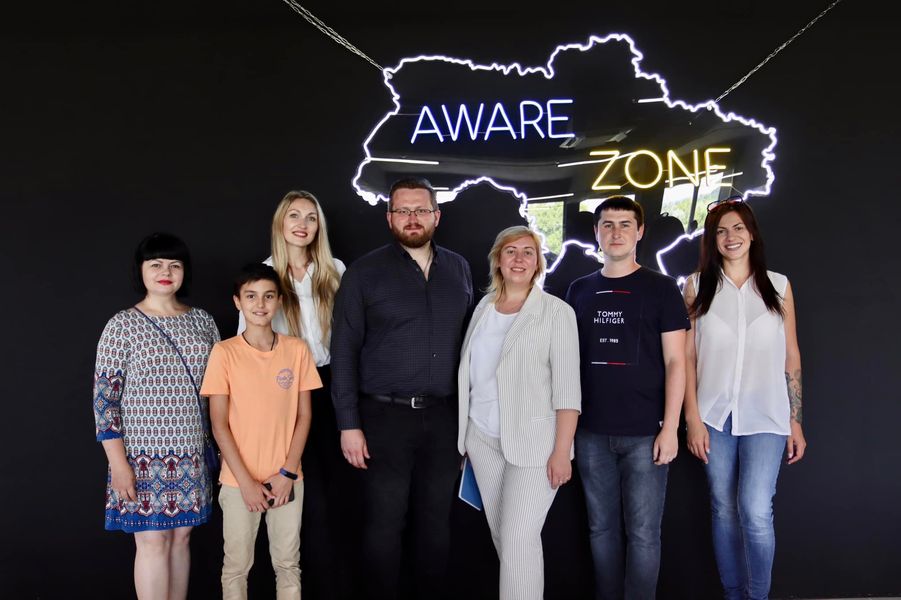
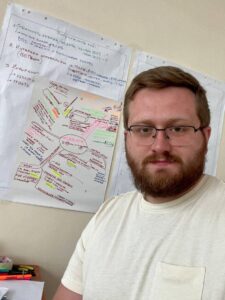
AwareZone is the first ever coworking space for young people in Mukachevo (Zakarpattia Oblast). It was opened by several internally displaced persons (IDPs) from Dnipro, Kyiv and Mariupol.

One of the initiators, Yurii Davydenko, left Mariupol and moved to Mukachevo in March 2022.

Davydenko worked at 1991 Mariupol IT Hub as an event manager for the IT community, bringing together local young people who were developing startups. He used his organizational and communication experience to open the new hub.

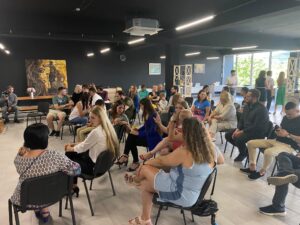
AwareZone supports displaced people, youth, and community activists with a comfortable space for development, creativity and socialization. More than 30 people – both locals and Mariupol residents – came to the opening. International partners EDYN, Ukraine Friends, 3.5 Percent, National Democratic Institute, Help Ukraine 22 and Operation Palyanytsya helped to equip the space.

“When I came to Mukachevo, I found out that local youth had no place to meet and IT people were asking for space to work. We immediately realized that there was a need for a creative space. Since we’d had such a space in Mariupol, we set to work. International donors and individual supporters provided money to open the coworking space. In a month we created a new space for startup development and a meeting place for activists. The experience from Mariupol helped us a lot. At home we gained experience in working with and for people, so in a new location we just applied our knowledge,” says Davydenko, Project Manager and IDP from Mariupol.

Located on the premises of a shopping center, the coworking space has tables, chairs and armchairs, laptops, a projector, and a flip chart – everything needed to hold an event. From the balcony visitors can enjoy an inspiring view of the mountains. The number of people willing to work here is gradually increasing.
“There were several spaces and hubs in Mariupol where the IT community gathered; trainings and various events were held, or you could simply work with a laptop. There was no such a place in Mukachevo, but the demand was big enough, so we believe that we will breathe life into the space as we have invaluable experience from Donetsk Oblast,” says Davydenko.

IDPs from Mariupol opened another coworking space in Khmelnytskyi and raised money to buy furniture, install high-speed internet, and set up 15 workstations with computers.

“Filling any space with life is hard work every day. You have to create an ecosystem, building relationships between those who come to the space, and attracting those who will be permanent residents – who will work every day and pay money for it. It is difficult, but we believe that we will succeed,” says Davydenko.

Now there are seven people in the coworking team. They are submitting grant applications to various organizations in order to improve conditions for bringing people together in the coworking spaces and facilitating their adaptation to a new place, despite themselves being up to 1,400 kilometers away from home because of the war.
FROM KIGURUMI PYJAMAS TO PINK PANAMAS: BUSINESSWOMAN FROM SIEVIERODONETSK ADAPTS IN GERMANY

22 June 2022

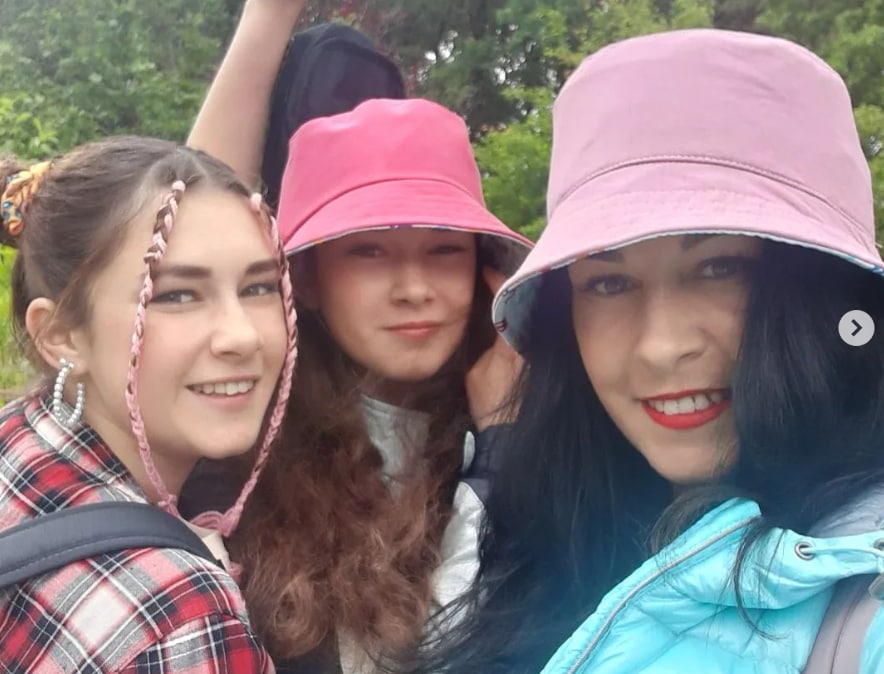
Olesia Vlasova and her two daughters could not leave Sievierodonetsk in Luhansk Oblast for two weeks because of heavy shelling in February 2022. Finally, they caught an evacuation bus to a camp for internally displaced persons in Zolotonosha, Cherkasy Oblast.

At home, Vlasova had a business making fleece kigurumi (pyjamas in the form of animals) and slippers to order. She offered her sewing services in Zolotonosha.

“The head of the camp asked me to sew mattress covers, because there were so many people in the camp and they had nowhere to sleep. She gave me fabric, but I didn’t even have a ruler, so I used a handy tool, a tape measure, to measure and cut the cloth. That was a new, interesting experience for me,” says Vlasova.

Due to the large flow of people and lack of space in the camp, she moved to Khust in Zakarpattia Oblast within a week, and then to Germany, to the town of Buchholz in der Nordheide in Lower Saxony. She applied for social benefits but also decided to earn money herself to be more independent.

There were three sewing machines in the German family where Vlasova stayed with her daughters. She set to work. Ukrainians who she met in Germany began bringing her clothes to repair, paying for these services.

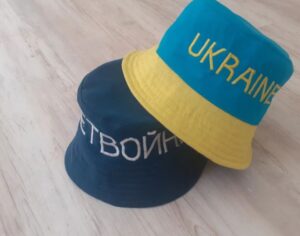
In May, Kalush Orchestra from Ukraine won the Eurovision Song Contest. The vocalist performed in a bright pink panama (bucket hat). Vlasova made a similar hat for herself from some pants she found among the clothes donated as humanitarian aid.
After that she started receiving orders for such panamas. The customers are Ukrainians living in Germany; she also got some orders from Britain. Vlasova is preparing another large parcel of panamas for Ukraine. Now she has two sewing machines which she uses together with her daughter.

If she stays in Germany until fall, Vlasova says she will return to making kigurumi. Her entire collection was burned in Sievierodonetsk, but she has not lost her optimism and wants to restore it.

“What’s most important is that I know how to do it; this knowledge is inside my head, so I can reproduce all the patterns again and sew my favorite kigurumi to order,” she says. “There are no such comfortable warm clothes for home in stores here, so I believe this is a free niche that I can fill. Besides, Germans value handmade work and are willing to pay money for it.”

Despite everything, she dreams of returning to Ukraine and creating a new wonderful workshop for making designer clothes for children and adults.

FROM CAMOUFLAGE NETTING TO CONSTRUCTION: STUDENTS’ VOLUNTEER EXPERIENCE DURING WARTIME

22 June 2022

Students of the Mariupol branch of the Ukrainian Leadership Academy (ULA Mariupol) left Mariupol a few days before the war started. They continued their studies in Ternopil. Volunteering is an important component of the study program, with each student aiming to devote 120 hours to volunteer activities. In fact, each student has now contributed more than 200 hours.

Read more about the good deeds the students participated in:

Netting

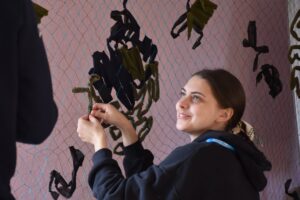
The students immediately made a stand for weaving nets, not only to help other volunteer organizations but to weave camouflage nets themselves for the army in their free time. Eight nets were sent to two students of ULA Mariupol who are currently in the ranks of the Armed Forces of Ukraine (AFU). In total, the students made more than 13 large camouflage nets.

Science Center Headquarters

The students contacted the humanitarian aid center in Ternopil to offer their assistance. They helped to structure the work of volunteers; accepted donated clothes, food and medical supplies, and distributed them to people who were forced to leave their homes due to active hostilities and moved to Ternopil.

“It’s incredible to see grateful faces and to feel that you can be helpful here and now,” says student Daria, about her volunteering experience at the humanitarian headquarters.

Candles for the military
In social networks, students saw an interesting way to help the AFU by making trench candles. These candles serve three purposes: a source of light, heat, and a small fire for heating water or food. Thus began the craft of making long-lasting candles from tin cans, paraffin and cardboard. Materials were donated by residents of Ternopil and people who have moved here. In total, the students made and sent to the frontlines more than 60 candles.

“I am very grateful to the volunteering department and the organizers of volunteers for the opportunity to express myself and enjoy helping others,” says Ivan Kovalev.

Energy bars and dumplings for the military

Together with Ternopil scouts organization, students made energy bars from dried fruit, berries and nuts. They also cooperated with Bunker C organization to make dumplings for the local territorial defense unit. Altogether they made about 100 kg of dumplings and about 1,300 bars, which now give energy to our soldiers.

Volunteering at a humanitarian warehouse

In cooperation with Ternopil Oblast Military Administration, the students organized and coordinated the process of collecting food kits for Kharkiv residents. More than 50 people were simultaneously involved in gluing boxes, packing them with food, and loading them into train cars. More than 300,000 humanitarian aid food kits for Kharkiv residents were packaged and sent.

Skhidnyi menti (eastern mentors)

Student Uliana Yatsenko and an initiative team of students created a mentoring project for displaced children in Ternopil. During the training course, children work individually with volunteer mentors and attend group meetings. This should help children with socialization and adaptation to a new place, and encourage social activity. Mentors conducted 133 classes and worked together with displaced children for more than 130 hours. In the future, the students plan to continue the project and scale it up to the national level.

“Volunteering helps me to recover resources and improve my mood. For example, when I volunteer with children, I learn a lot of new things together with them. They teach me to enjoy the little things in life, and not to lose the twinkle in my eye,” says student Vika Plysak.

Building Ukraine Together

In Drohobych, together with Building Ukraine Together (BUR) organization, students helped rebuild a dormitory for displaced people. They spent three days at the construction site to prepare the floor of the building for cosmetic repairs. They also participated in the construction of a shelter for displaced persons and equipped a house for Plast (Ukrainian Scouts Organization) members in Drohobych.

“I like that volunteering gives me the opportunity to meet new people and communities. Also, helping others provides a lot of experience. For example, I learned how to put in window glass,” says student Yana Trofimchuk.

ULA is a ten-month youth leadership program uniting students from different regions in one center to share culture and build social connections. There are 37 students studying in ULA Mariupol branch.

ENTREPRENEURS FROM ZAPORIZHZHIA DEVELOP SNAIL BUSINESS DURING THE WAR

16 June 2022

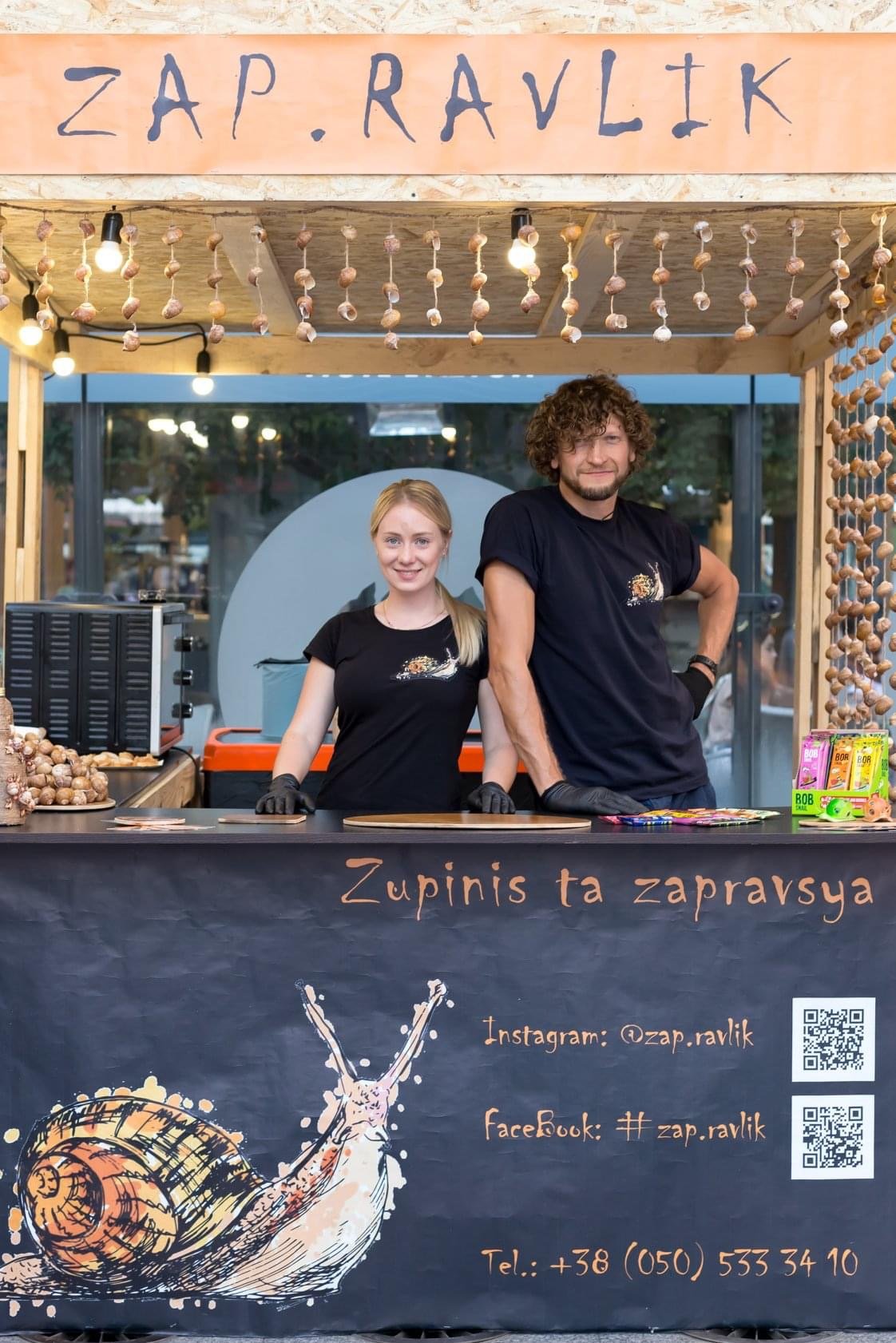
Viktoriia and Oleksii Sorokiny from Zaporizhzhia began developing a family snail farm three years ago. The day before the war started, they opened a sales point in the city center offering burgers with snail cutlets. War temporarily interrupted their business, but the couple have now resumed work, and internally displaced persons (IDPs) from Mariupol and Berdiansk are among their customers for snails and oysters.

The Sorokiny family worked in automation of greenhouses until they got a job modernizing a snail farm and were inspired to try the business for themselves.

“When we saw the process of growing and processing, we were fascinated by the idea to create such an enterprise at our place. That’s how we started our snail business. People say it’s for lazy people, but it’s not like that at all,” says Viktoriia Sorokina.
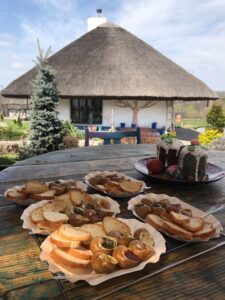
The couple developed their business by visiting festivals and investing in their farm in the village of Volodymyrivske, near Zaporizhzhia, growing, processing and selling finished snail products. Their breeder’s stock (the so-called snail livestock) started at 60 kilograms and grew to one and a half tons of snails.

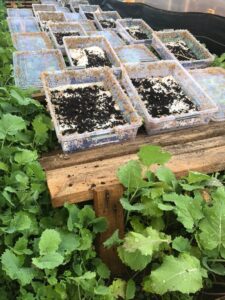
Snails are grown in a room with constant temperature and humidity. The family also have a pasture planted with rape for snail feed.

At first the couple sold snail delicacies at fairs, festivals and tasting events. On February 23, they opened a sales point in the center of Zaporizhzhia. But the next day Russia invaded Ukraine, and the point closed.

“Of course, we were not ready for such a turn of events and took the family to

the village to prepare for the worst-case scenario. We lived there for a week, arranged shelter, and stocked up on food. But thanks to our defenders, the worst-case scenario did not happen,” Sorokina remembers. “After a while, we decided to start work again because there was a shortage of food and essentials. If no one is working, then who will support the economy and our defenders? During the first days of Russia’s invasion, many of our relatives, acquaintances and partners joined the Armed Forces of Ukraine. We knew there were problems with equipping our soldiers, so we decided to reopen our sales point to make money and help others.”

The entrepreneurs had little hope that people would eat snails during wartime.

Finally, they decided they should start with “understandable” products: they called all their farmer partners and bought cheese, milk, pastries and asparagus from them. They also put snails in the freezer, just in case. With this to offer, they opened the sales point. In addition to starting work themselves, this helped local farmers who had few or no sales.

“And a miracle happened! People started coming and buying snails, and then we added oysters from our partners, and people started buying them as well,” says Sorokina. “It was incredible! Thanks to this we managed to start our production again and bring our chefs back to work after they’d been at home for a month. We believed that we would succeed. After we started selling, our income increased and we had the opportunity to support our defenders.”
IDPs from Mariupol and Berdiansk began to come to the city, fleeing from the war, and also became customers.

“Our customers say that when they buy oysters and snails from us, they are reminded of their homes and the sea. One girl from Berdiansk often comes in the evenings, buys a portion of snails and sits for a long time near our sales point, probably remembering her home. Now people do not make plans, they live for today, so they allow themselves to enjoy delicacies,” says Sorokina.

Thanks to the snail business, eight people have paid jobs and the entrepreneurs themselves pay taxes to support the economy and the approaching victory of Ukraine. They also help displaced people who have come to the city.

Sorokina dreams that peace will soon return to Ukraine, and she and Oleksii will again take part in craft farming festivals and promote their snail products.

IT COMPANY FROM KRAMATORSK RESUMES PRE-WAR SALES AND PLANS TO ENTER FOREIGN AGRICULTURAL MARKET

14 June 2022

IT company QuartSoft closed its office in Kramatorsk in March 2022 and decided to look for a safer region to work in.

While some employees went abroad, a third agreed to move to Ivano-Frankivsk, where the firm had had a small office since 2014. This has grown significantly to more than 50 people, some working from home, others in the office.

“We told the workers that it was up to them to decide whether or not to leave Kramatorsk. Some people agreed to go to Ivano-Frankivsk, and we helped them with accommodation and apartment rent,” says HR manager Maryna Borysenko.

The company’s three departments – game, web, and agro development – kept all their contacts and started working again in just two weeks. The loss of most of its customers in the agricultural sector became a challenge the company had to address.
“Our company is developing its own IT product for farmers, called Soft.Farm. This is a full system of IT solutions for precision farming. With the beginning of the war, we lost a significant number of clients who worked with us in this direction. Some of them could not continue working due to hostilities, others are under occupation and have lost markets, and therefore the opportunity to order our services. Although some clients continue cooperating with us, we are actively looking for new partners,” says Borysenko.

The company lost most of its clients in Donetsk, Luhansk, Kharkiv, Kherson and Mykolaiv oblasts.

However, the IT company is currently looking for other opportunities and is even considering bringing its product to farmers in Europe and Africa. By the end of May, it had already attracted new customers and exceeded its sales plan.

QuartSoft also supports children who are displaced from their cities, schools and kindergartens and have lost their friends. The company organizes fun days with entertainers, competitions and prizes: the children paint T-shirts, hunt for treasure, and create paintings from colored sand.

“Many people and businesses are undergoing a big transformation right now. But I believe that we will successfully cope with all the challenges and come out of it even stronger. This will be an impetus for the further life and development of both our company and of Ukraine,” says Borysenko.

QuartSoft also dreams of holding a large IT conference in Donetsk Oblast, which will bring together colleagues, IT specialists and new people interested in the development of the IT industry. They believe that after Ukraine’s victory they will certainly make this idea come true.

FROM FAMILY TO MILITARY LOOK – ENTREPRENEUR FROM POKROVSK ADAPTS IN LVIV

10 June 2022

Victoria Karpova moved her apparel business to Lviv from Pokrovsk, Donetsk Oblast. Before the war, the businesswoman developed a training center at home and her own sewing workshop, where she made stylish clothes for the whole family. Now again she is teaching beginners sewing, but the clothes they make are for the military.

Karpova has been in the garment business for more than 20 years. She invested time and money in the development of her company, Pokrovchanka, and trained those who wanted to sew and earn a living. Staff at her enterprise made women’s, men’s and children’s clothing, branded clothes for employees of various companies and creative teams, and embroidered shirts and dresses. The company sold clothes to order for regular customers, and through marketplaces and a network of dealers. The team also took active part in forums, exhibitions and shows.

Karpova also established a training center called Kvitka Lonu (Flax Flower). The center was opened with the support of international donors, and three groups of students (more than 40 people from Donetsk Oblast) were recruited to learn sewing for free.

Karpova participated in Business Breakfasts for entrepreneurs organized by USAID Economic Resilience Activity (ERA) to help small businesses in Donetsk Oblast establish contacts with each other and find new partnerships. She was also a participant in ERA training and mentoring programs for representatives of small enterprises, where she learned how to scale her business and find new customers.

In the winter of 2021, the businesswoman was invited to start a garment enterprise in Sloviansk, Donetsk Oblast. The new workshop was launched but only worked for a week as the war started.

Karpova quickly decided to leave and escape the hostilities in Donetsk Oblast. When Russia invaded, some of her equipment was already packed up as she was already preparing to move after the premises she rented were sold. She participated in a government program for business relocation to safer regions initiated by the Ministry of Economy of Ukraine, receiving UAH 40,000 reimbursement for the relocation of her equipment.

“I packed up my sewing machines a few months before the start of hostilities, so when I received the offer to move, I didn’t have to think for a long time. All the puzzles came together: we quickly found a car, loaded our sewing equipment and left Pokrovsk,” she said.

She decided to move to Lviv, and while already on the way she was told about premises where she could place the equipment and start working. Her clothing, however, had to be changed from a family look to a military one. The knowledge and skills gained during ERA training activities helped the businesswoman to resume her sewing business in Lviv.

Her workers from Pokrovsk refused to move, so Karpova looked for new seamstresses in Lviv, and found two displaced women from Kharkiv. They had no sewing experience, but were eager to learn from the businesswoman.

Now the new team is fulfilling orders for military tactical pants, and is also designing a military jacket. There is great demand for such clothing in Ukraine.

“It is difficult now, but I believe I am gaining new experience and new opportunities are opening up for me, so I will use them to become stronger. I and many people from the east are very strong and tough, we can get used to new conditions. You just have to not give up, and do your best,” says Karpova.

After the war, she plans to return to her native Pokrovsk and open a branch of her business there, with the main office in Lviv.